



hawaii
この記事は現在、英語版のみの公開です。
A luau is one of those experiences that sounds perfect on paper—fire dancers, tropical buffets, hula under the stars—but the reality with small children can go either way. You might have a magical evening your six-year-old talks about for months, or you might spend three hours wrestling a tired toddler in the dark while your dinner goes cold. The difference usually comes down to age, timing and choosing the right show.
Here's what actually matters when deciding whether to book a luau with young children, and how to make it work if you do.
The age question: when children actually enjoy luaus
Under three is too young for most families. Your child won't remember it, won't follow the story, and you'll spend the evening keeping them quiet or walking laps around the venue. Luaus typically cost £400 to £600 for a family of four—that's a lot to spend on stress.
Between three and five, it depends entirely on temperament. If your child can sit through a meal at a restaurant and enjoys music, they might manage the first half of the show. Bring quiet toys and be prepared to leave early if needed. Buffet-style luaus work better than plated multi-course dinners at this age because you can feed them quickly and let them move around a bit between courses.
Ages six to twelve is the sweet spot. Children this age usually understand the cultural storytelling, get genuinely excited about fire dancers, and have the stamina to stay engaged for two to three hours. They're also old enough to try new foods without drama and to appreciate that this is something special.
The other factor is bedtime. Many shows don't start until seven or half-past, and the performance runs until nine or later. If your child turns into a nightmare after seven o'clock, no amount of fire dancing will salvage the evening.
[[image:1]]
What makes a luau family-friendly (beyond the ticket price)
Children's tickets are usually discounted—anywhere from a third to sixty percent of the adult price—but that's not the only thing that matters. A cheaper show that starts late and offers no activities before dinner can be harder work than a pricier one with better logistics.
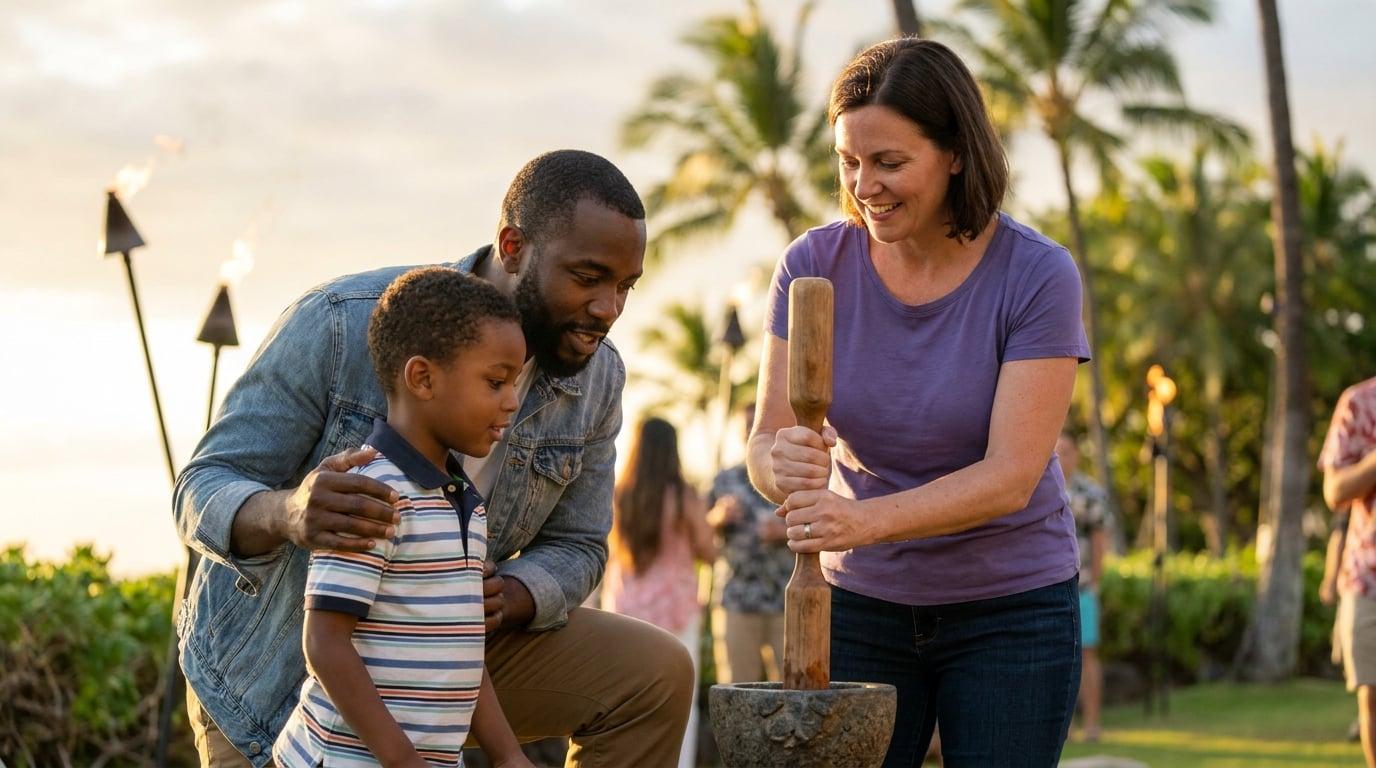
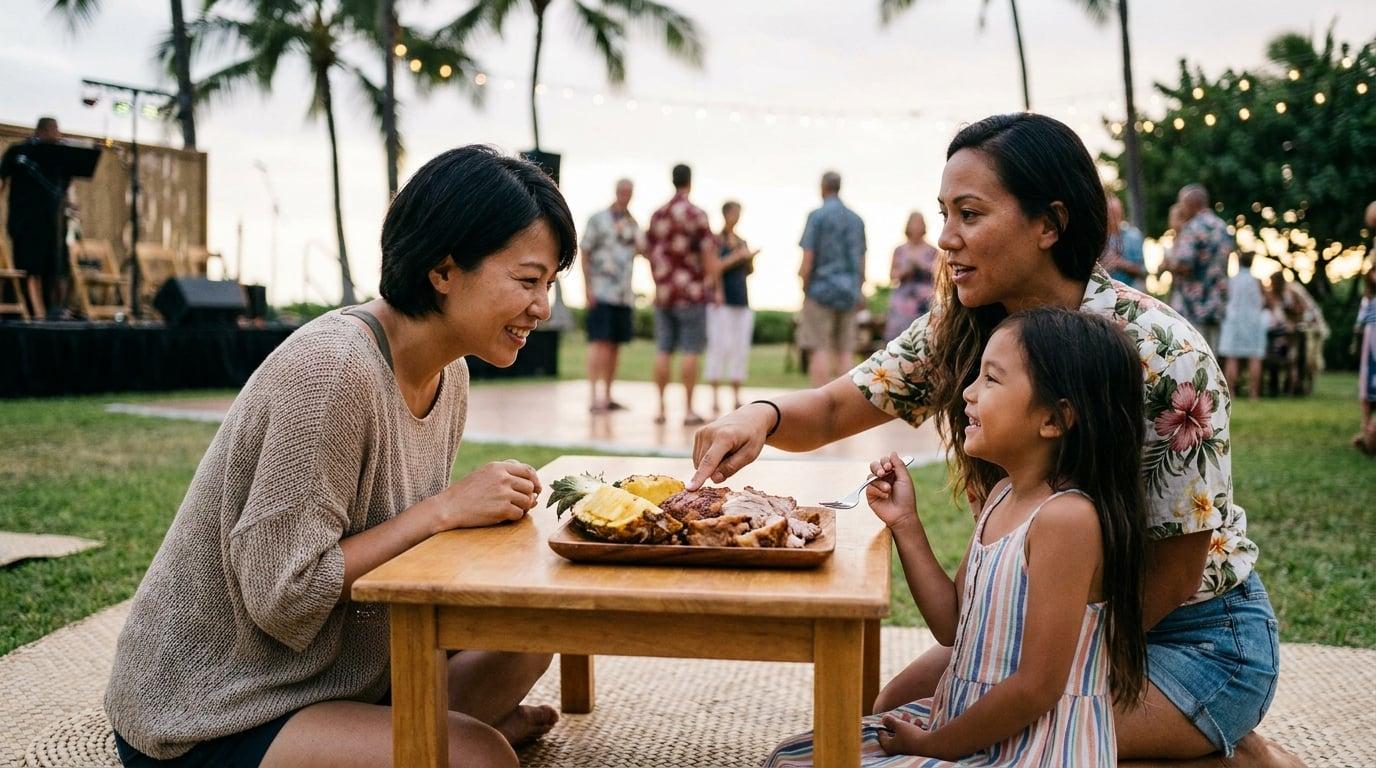
Pre-show activities are essential for young children. The half-hour before dinner is when kids get restless. Good family luaus offer lei-making, hula lessons, coconut husking, temporary tattoos or games that let children burn energy and feel involved. These activities also give you something to talk about during dinner when attention starts to wander.
Buffets suit families better than plated service. You can choose familiar foods for picky eaters—rice, fruit, plain chicken—and go back for seconds without waiting. The downside is that large buffets release tables in waves, so you might not eat until forty-five minutes after the first group. Plated multi-course dinners look elegant but require children to sit still for longer stretches between courses.
Space matters. Check whether tables are crammed together or whether there's room for a toddler to stand and stretch without blocking someone's view. Access to toilets is more important than you'd think—luau venues are often outdoors and bathrooms can be a long walk in the dark.
Sightlines from every table make a difference. Some shows put families with young children at the back or sides, where it's harder to see. If you're paying full price, you want your child to actually watch the performance, not spend the whole time craning their neck.
Which Hawaiian luaus work best for young families
The Polynesian Cultural Center on Oahu is the most child-oriented option across the islands. It's structured as a full-day visit with village activities in the afternoon, so the luau and evening show are just part of the experience. Children can pace themselves, and there's plenty to do if they get restless. The downside is that it's a very long day—plan for at least six hours on site—and it's a drive from Waikiki.
Toa Luau in Waimea Valley, also on Oahu, is smaller and more intimate, and your ticket includes entry to the valley itself. The show keeps traditional Hawaiian culture at the centre, and the venue has space for children to roam before the performance starts.
Ka Wa'a at the Aulani Disney Resort is purpose-built for families. Children get individual bento boxes (adults have a buffet), Disney characters make appearances, and the show is paced like a stage production with clear storytelling. It's polished and predictable, which works well for younger children. You don't need to be a resort guest to attend.
On Maui, Old Lahaina Luau offers table service and gives every party their own table, so you're not sharing space with strangers. The traditional ground seating option is popular with children. The food is excellent but leans heavily towards authentic Hawaiian dishes, so picky eaters might struggle—though rice, bread and kalua pork are usually safe bets.
Grand Wailea's luau includes a kids' meal of chicken nuggets and fries, which solves the picky-eater problem entirely. The resort grounds are spacious, so children can walk down to the pool or ocean before the show starts. Fire knife dancing is a highlight.
Smith Family Garden Luau on Kauai is one of the best-value shows statewide and has a long reputation for welcoming families. The gardens are beautiful, and the relaxed atmosphere makes it easier if your child needs to move around.
[[image:2]]
How a local nanny helps here
If you're travelling with more than one child, or if your children have very different ages and bedtimes, a local nanny from The Travel Nanny can stay back at the hotel with the youngest while you take an older child to the luau. That way everyone gets an experience suited to their age, and you're not spending the evening juggling a sleeping baby and a six-year-old who actually wants to watch the show. Nannies in Hawaii are familiar with typical luau schedules and can manage bedtime routines so you can enjoy the evening without rushing back.
Timing your luau during your trip
Don't book a luau for your first night. You'll all be tired from the flight, possibly jet-lagged, and you won't have your bearings yet. Your child will be out of routine, and you'll be stressed about getting there on time.
Night two or three is ideal. You've recovered from travel, you've settled into your accommodation, and you know your way around. Your child has adjusted to the time zone and you haven't blown your entire budget yet. You also have a better sense of how your child is coping with the trip—if they're exhausted and overstimulated by day three, you'll know a late-night show isn't going to work.
Avoid booking a luau on the same day as a long activity like a boat trip or a full day at the beach. Children won't have the stamina for both, and you'll end up with meltdowns before the show even starts.
Practical tips for the evening itself
Arrive early, especially if the venue offers pre-show activities. This gives your child time to explore, use the toilet, and settle in before the crowd arrives. Early arrival also means better parking and a more relaxed start.
Bring layers. Luaus are outdoors, and temperatures drop once the sun sets. A hoodie or light jacket for each child will save you from spending the second half of the show with a cold, cranky child on your lap.
Feed your child something small before you go if the show starts late. A snack at five o'clock means they won't be ravenous and whining by the time dinner is served at seven.
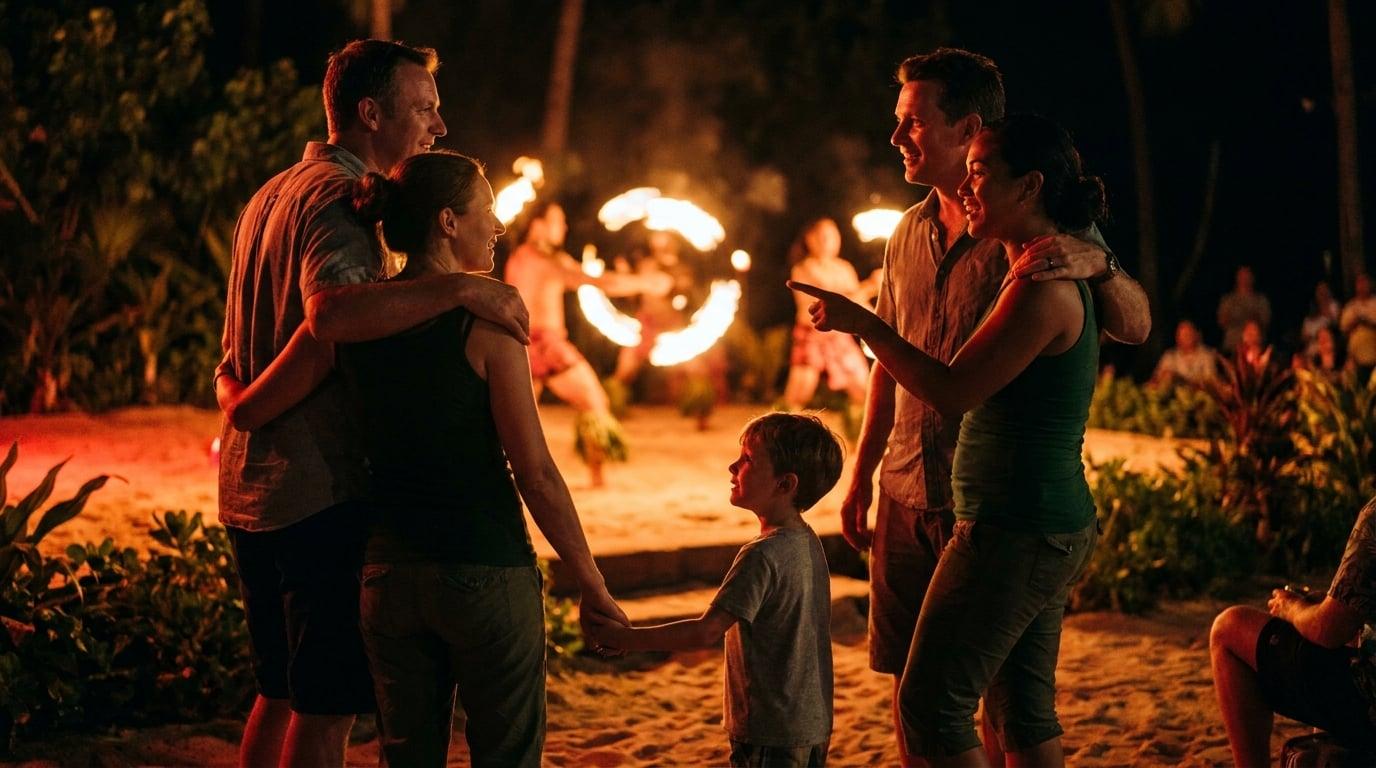
Sit towards the aisle if possible, so you can slip out easily if your child needs the toilet or a break. Explain to your child beforehand that the show will be long, it will get dark, and there will be loud drumming and fire. Some children find fire knife dancing thrilling; others find it frightening. Knowing what to expect helps.
Let your child try poi and other traditional foods, but don't force it. Most luaus have enough variety that even a picky eater can assemble a decent plate. If your child refuses everything, at least they've experienced the evening and you haven't spent the whole time arguing about food.
[[image:3]]
When to skip the luau entirely
If your child is under three, save the money. Spend it on something you'll all enjoy—a morning boat trip, a shave ice crawl, a resort pool day. They won't remember the luau, and you'll remember it for the wrong reasons.
If your child has severe food allergies or sensory sensitivities, check carefully with the venue before booking. Buffets can be overwhelming, and cross-contamination is a real risk. Some shows can accommodate allergies with advance notice, but it's not guaranteed.
If your child's bedtime is rigid and early, don't fight it. A seven-thirty start time means you'll be dealing with an overtired child by eight o'clock, and no one will enjoy it. There are plenty of other ways to experience Hawaiian culture—daytime hula performances, cultural centres, even a casual beach bonfire—that don't require staying up past bedtime.
If you're travelling with a baby who still needs frequent feeds or naps, the logistics are too complicated. You'll spend the evening walking laps with a crying baby in the dark instead of watching the show. Wait a few years.
Final checklist: is your family ready for a luau?
- Your child is at least four years old, ideally six or older
- They can sit through a restaurant meal without constant entertainment
- Their usual bedtime is eight-thirty or later, or they can cope with one late night
- You're booking for night two or three of your trip, not the first evening
- You've checked that the venue offers pre-show activities and a buffet with familiar foods
- You've confirmed the start time and end time, and you're comfortable with the schedule
- You've explained to your child what to expect—the music, the dancing, the fire, the traditional food
- You've packed layers, snacks and a small quiet toy in case of restlessness
- You're prepared to leave early if it's not working, and you're okay with that
- You've accepted that this is an experience, not a guaranteed perfect evening, and that's fine