



taiwan
この記事は現在、英語版のみの公開です。
Taiwan's tallest building draws every first-time visitor to Taipei, and the 89th-floor observatory delivers exactly what you hope for: 360-degree views over the entire city, the green ring of mountains beyond, and—on clear days—a perspective that makes the dense urban grid below look like a toy town. The experience is entirely suitable for families with babies, toddlers and young children, but a few practical decisions around timing, the famously fast elevator and what to do once you're up there will make the difference between a smooth outing and a fractious one.
Children under 115 centimetres tall enter free with a paying adult, and the indoor observation deck is fully enclosed, climate-controlled and accessible by lift throughout. The real challenge is not whether young children can visit—they absolutely can—but how to time your arrival, prepare them for the 37-second ascent, and keep their attention once the initial thrill of being 383 metres above the streets has worn off.
When to visit with toddlers and young children
Timing matters more with young children than it does for adult-only trips, because queues, crowds and overstimulation all compound quickly when you're travelling with a toddler who missed their nap or a preschooler who's been on the go since breakfast.
The observatory opens at 10:00 each morning, and the first 30 to 45 minutes are the calmest of the entire day. Families who arrive at opening time walk straight to the lift with minimal queuing, spend time on an uncrowded deck, and finish before late-morning fatigue sets in. This window works especially well if your child is an early riser or if you want to pair the visit with lunch in the Taipei 101 mall afterwards.
Weekday afternoons between 14:00 and 16:00 are another good option. Tour groups tend to arrive earlier or later, and families with school-age children are still in class. The trade-off is that you miss the dramatic light of early morning, but the deck is noticeably quieter than it will be from 16:30 onwards.
Sunset is the single busiest time at Taipei 101. The hour before the sun drops behind the mountains brings the longest queues, the most crowded viewing windows, and wait times that can stretch to 30 minutes or more for the lift. If your children are patient and you genuinely want to see the city in daylight, at golden hour and then lit up after dark, arrive a full 90 minutes before sunset and be prepared to stay for at least two hours. If patience is in short supply, skip sunset altogether and come earlier in the day.
Weekends and public holidays are predictably busier at all times. If your schedule is flexible, choose a weekday.
[[image:1]]
Preparing your child for the high-speed elevator
The lift is part of the experience, not just a means of getting to the observation deck. It travels at 1,010 metres per minute and covers the 84 floors from the fifth-floor entrance to the 89th-floor observatory in 37 seconds. For adults, it's a novelty. For young children—especially toddlers who have never experienced rapid changes in air pressure—it can be startling.
The cabin is pressurised to manage the speed, and most children feel a slight sensation in their ears similar to take-off on an aeroplane. Babies and toddlers cannot equalise pressure by yawning or swallowing on command, so offer a bottle, dummy or small snack during the ascent if they're fussy. Older children can be encouraged to swallow, chew gum (if age-appropriate) or hold their nose and gently blow.
The lift cabin itself is designed to distract. The ceiling is fitted with tiny lights that mimic a starry sky, and a digital panel on the wall shows your current floor and altitude in real time as you rise. Pointing out the numbers as they change keeps a preschooler or early-primary child engaged for the short journey, and many children find the speed itself exciting rather than frightening once they understand what's happening.
If your child is anxious about lifts in general, explain in advance that this one is very fast, that their ears might feel funny for a moment, and that it will be over in less than a minute. Frame it as an adventure rather than something to worry about, and stay calm yourself—children take their cues from the adults around them.
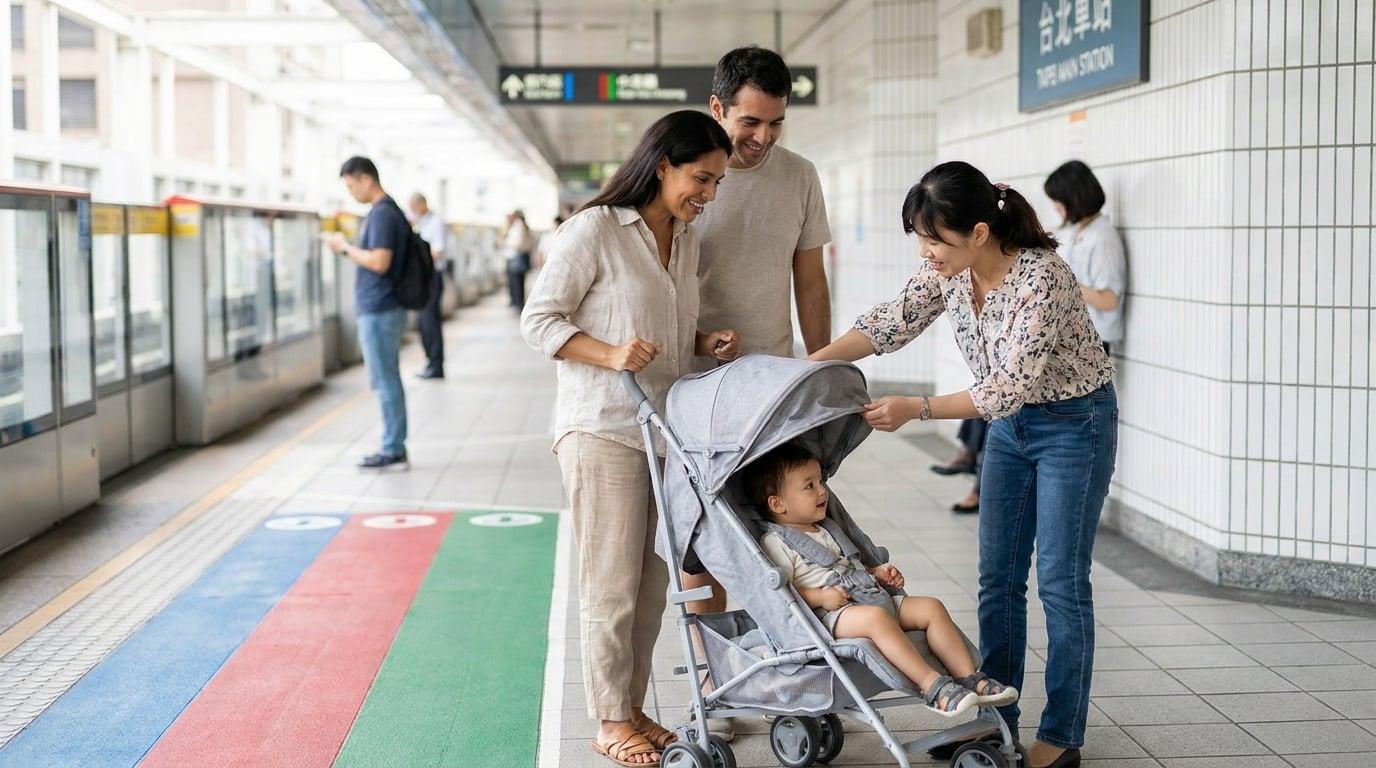
Pushchairs and strollers are permitted in the lift and throughout the observatory, and the entire experience is step-free. If you're travelling with a baby in a carrier, there are no restrictions.
What to see and do on the 89th floor
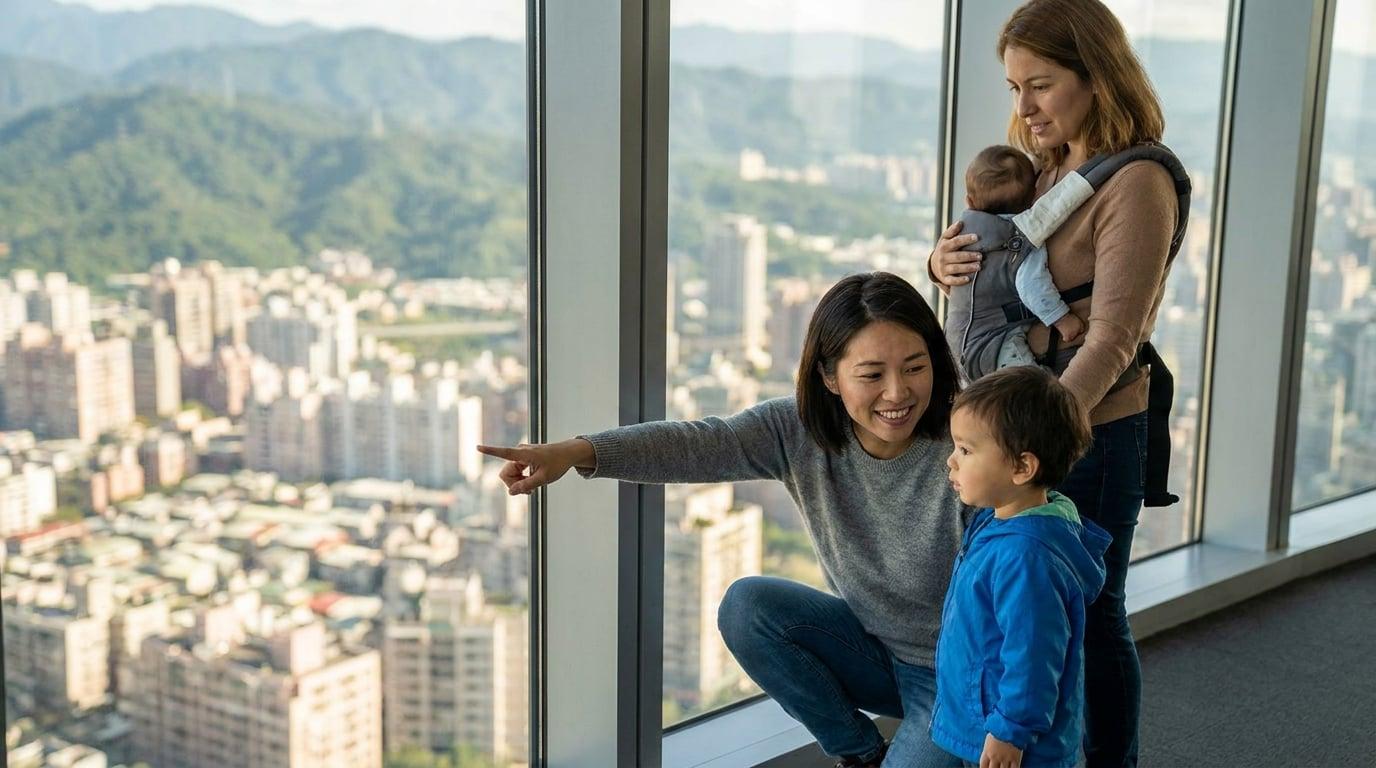
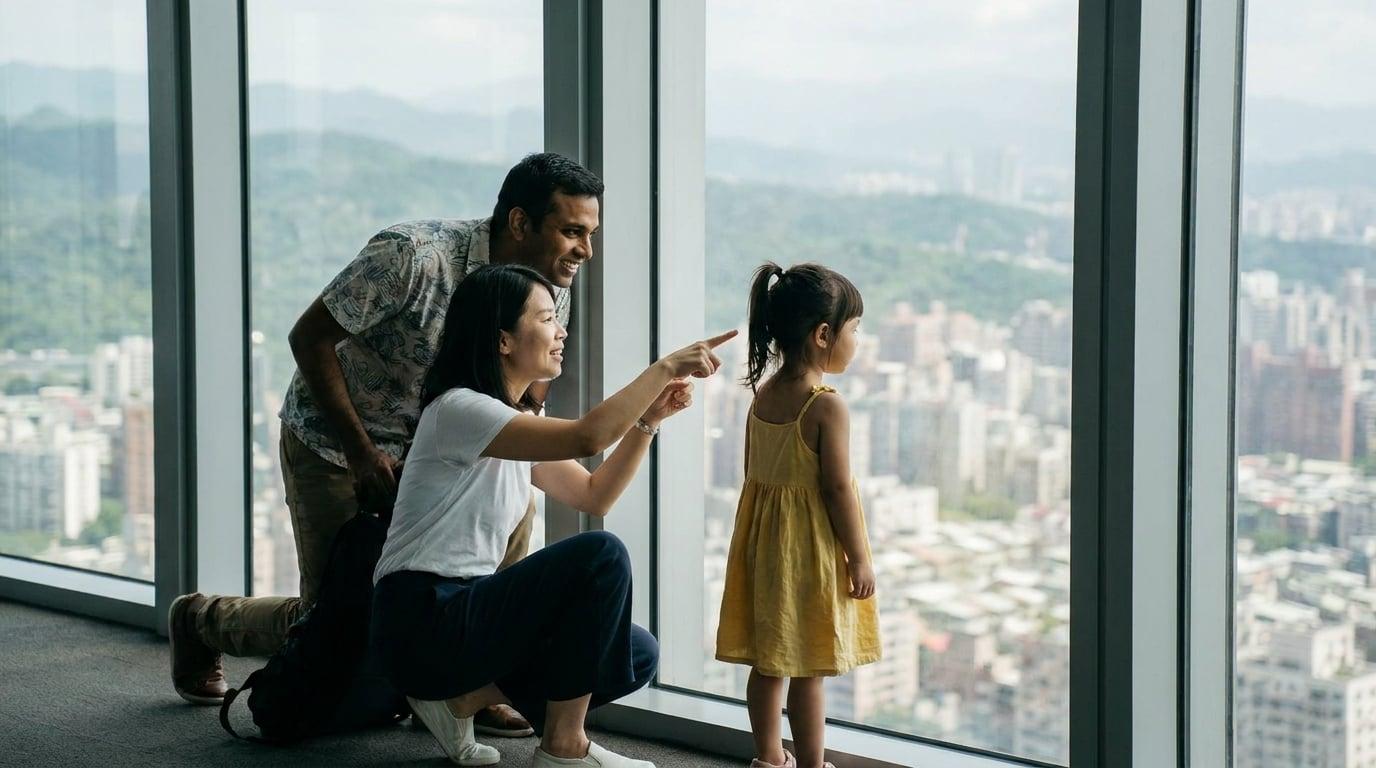
The main observation deck on the 89th floor is a wide, enclosed space with floor-to-ceiling glass on all sides. The view is the obvious draw, but young children process height and distance differently from adults, and a sweeping cityscape holds their attention for only so long.
Start by walking the perimeter together and pointing out things they can recognise: roads, rivers, parks, the mountains in the distance. If you visited any nearby landmarks earlier in your trip—Elephant Mountain, the Sun Yat-sen Memorial Hall, Daan Forest Park—help them locate those places from above. Making the view relatable keeps toddlers and preschoolers engaged longer than abstract talk about how high you are.
High-powered telescopes are positioned around the deck, and children old enough to look through them enjoy picking out details—individual buildings, moving traffic, even the tiny figures of people far below. The telescopes are free to use and adjust easily for different heights.
The 89th floor also features rotating exhibitions and themed photo zones that change seasonally. Recent installations have included oversized sculptures, interactive displays and character-themed areas that appeal directly to children. These are not advertised in advance, so what you find will depend on when you visit, but they provide a welcome break from window-gazing and give younger children something tangible to interact with.
There is a small café on the 89th floor where you can buy drinks, snacks and light meals. It is not a dedicated children's play area, but it does give you somewhere to sit down, regroup and let a restless toddler have a biscuit and a break before continuing. Free Wi-Fi is available throughout the observatory if you need to look up information or entertain an older child with a tablet for a few minutes.
[[image:2]]
The 88th floor and the giant damper
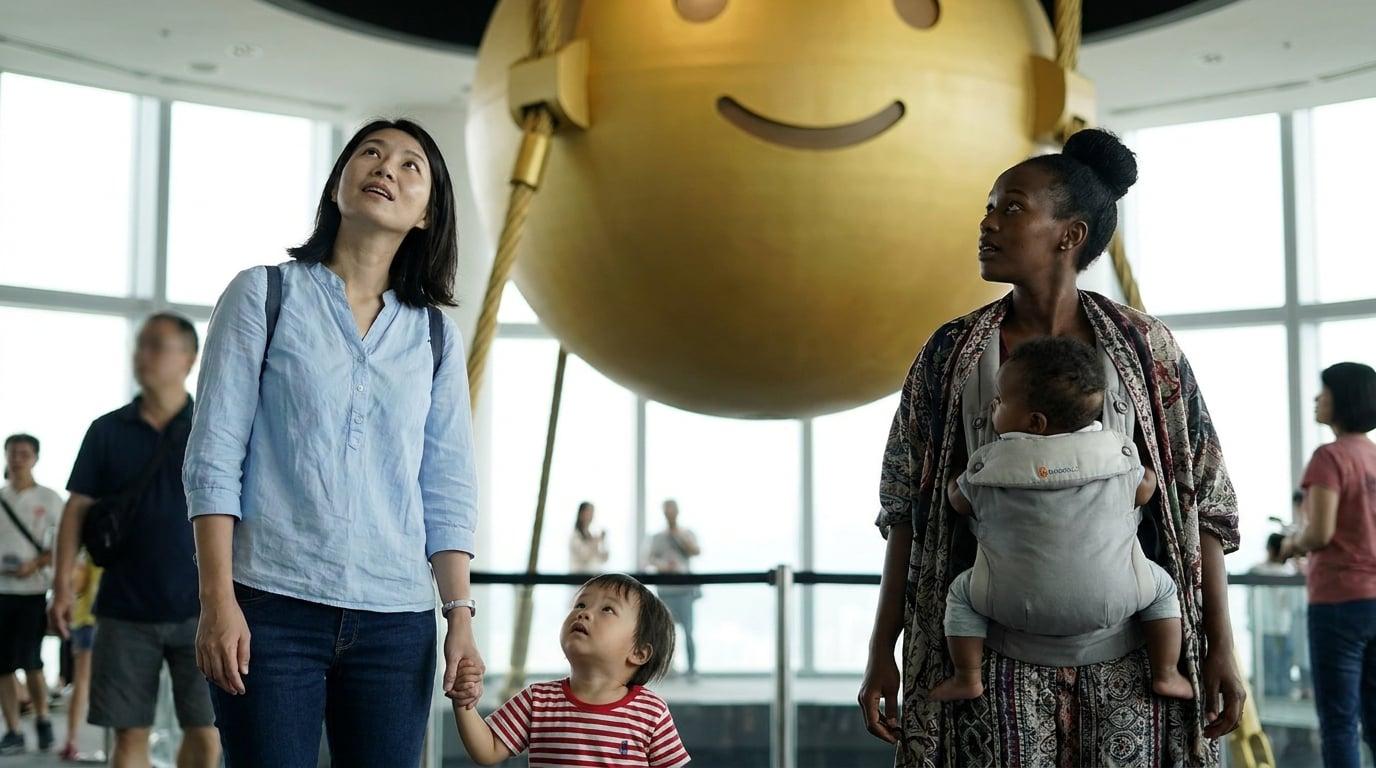
One floor below the main deck, accessible by a short staircase, sits the 88th floor, where you can see the tuned mass damper up close. This is a 660-tonne steel sphere suspended between the 88th and 92nd floors, designed to stabilise the building during earthquakes and typhoons. It is painted gold, decorated with a friendly face, and genuinely impressive in scale.
Most young children respond to the damper with fascination rather than fear. It is huge—far larger than anything they will have seen indoors before—and the exhibitions around it explain in simple terms how it works. There are illustrated panels, models and short videos, some of which are pitched at a level that older preschoolers and early-primary children can follow.
The damper does not move unless the building is swaying, so on a calm day it simply hangs there, still and silent. That is less dramatic than children might expect, but the sheer size of it holds their attention, and it gives you something concrete to talk about: how buildings stay safe, why engineers designed it, what it would look like if it were swinging.
The 88th floor is included in your standard ticket and takes only 10 to 15 minutes to explore. It is worth the detour, especially if your child is at an age where they ask how things work.
The 91st-floor outdoor deck (weather permitting)
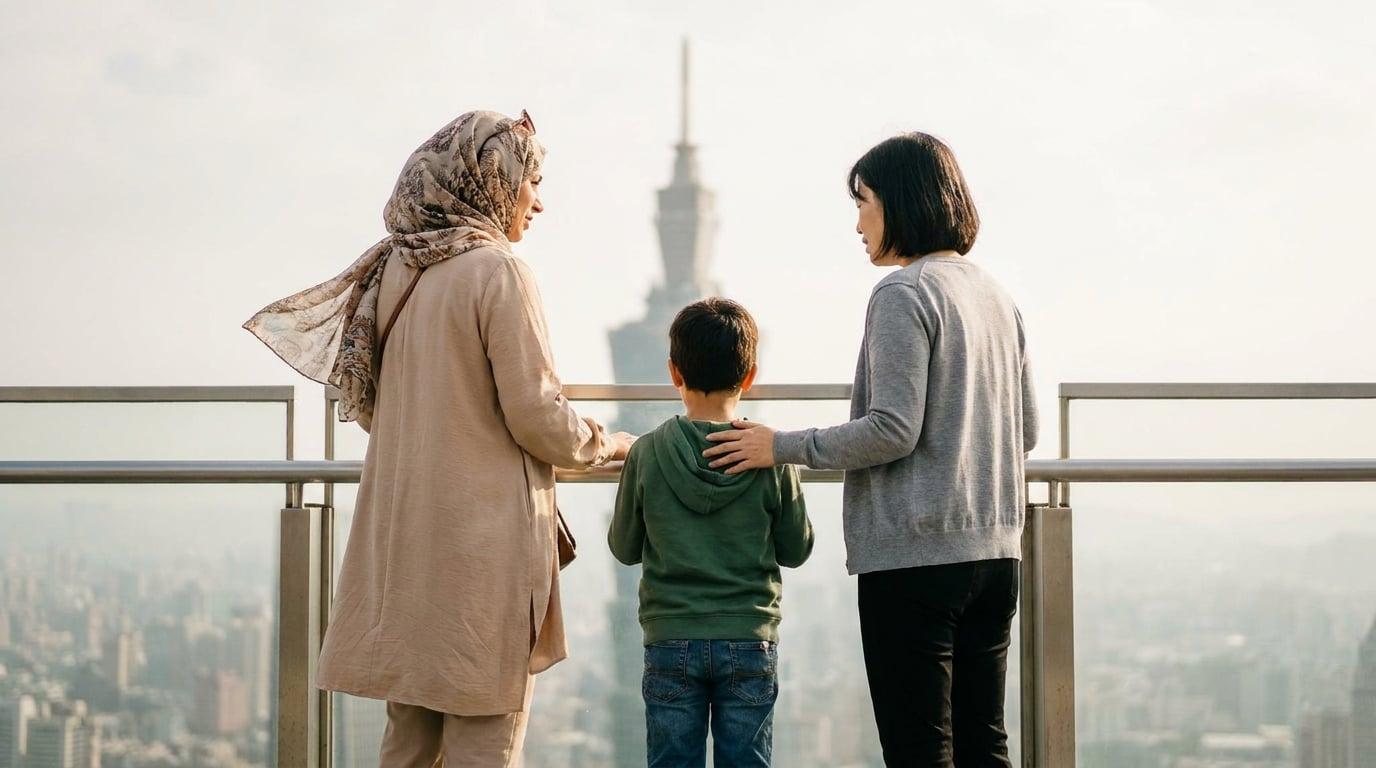
When weather conditions allow, the 91st-floor outdoor observation deck is open and accessible via a staircase from the 89th floor. It sits higher than the main indoor deck and offers an open-air perspective with wind, fresh air and an unobstructed view of the city and the tower's spire above.
The outdoor deck is not suitable for very young toddlers who are unsteady on their feet or likely to dart towards railings, but it is perfectly safe for older children who can follow instructions and stay close. The railings are high, the space is secure, and staff are present.
Wind is the main variable. Even on a calm day at street level, the 91st floor can be breezy, and on windier days the deck is closed entirely. If it is open when you visit and your children are old enough to enjoy it, the outdoor deck adds a different dimension to the experience—literally feeling the height rather than just seeing it through glass.
The 91st floor also has a small indoor area with a short film about the building's construction and the annual New Year's Eve fireworks display. It is not essential viewing, but it gives you a quiet spot to sit down if the outdoor deck is too windy or crowded.
[[image:3]]
How a local nanny helps here
Managing lift queues, keeping toddlers entertained at height, and navigating a busy attraction in a foreign city is easier with an extra pair of hands. The Travel Nanny matches visiting families with experienced local nannies in Taipei who know the observatory well, can help with pushchairs and bags, keep young children engaged while you take in the view, and offer a calm, familiar presence during the high-speed elevator ride. A local nanny also knows the quietest times to visit, the best spots for family photos, and how to make the most of the exhibitions on the 89th floor with children of different ages.
What to bring and what to leave behind
The observatory does not permit food or drink to be brought in from outside, though the café on the 89th floor sells snacks, drinks and meals if you need them. Nappies, wipes and a change of clothes for young children are fine to carry, and there are accessible toilets on the observation deck.
Pushchairs and baby carriers are both permitted and practical. The entire route from the fifth-floor entrance to the 89th floor and back down is step-free, and the lifts are large enough to accommodate pushchairs comfortably. If your child is at an age where they tire easily or refuse to walk, bring the pushchair.
Large bags and backpacks are allowed, but lockers are available on the fifth floor if you prefer to leave bulky items behind. If you are visiting Taipei 101 as part of a longer day out and carrying shopping or a large nappy bag, the lockers are worth using.
Dress in layers. The observation deck is climate-controlled and comfortable, but the outdoor 91st floor can be windy and cooler than you expect, especially in the early morning or late evening. A light jacket for your child is sensible if you plan to go outside.
How long to allow
Most families with young children spend between one and one-and-a-half hours at the observatory, including time for the lift, the 89th-floor deck, the damper on the 88th floor, and a stop at the café or toilets. If your child is particularly engaged by the view or the exhibitions, you might stretch to two hours, but anything longer than that is unusual unless you are deliberately staying for sunset and the transition to night.
Babies and toddlers under two rarely need more than 45 minutes to an hour. They will not remember the view, but they often enjoy the lift, the bright lights, and the novelty of being somewhere high and different. Keep the visit short, relaxed and led by their cues rather than trying to see everything.
Older preschoolers and early-primary children can manage the full experience—89th floor, 88th floor, 91st floor if it is open—and will ask questions, use the telescopes, and engage with the exhibitions. Allow the full 90 minutes to two hours for this age group, and build in time for a snack or a sit-down if they are flagging.
Before you go: a practical checklist
- Check the official Taipei 101 Observatory website for current opening hours, ticket prices and any temporary closures
- Aim for a weekday morning at 10:00 or a weekday afternoon between 14:00 and 16:00 to avoid the largest crowds
- Bring a bottle, dummy or small snack to help babies and toddlers manage ear pressure during the 37-second lift ride
- Explain the high-speed elevator to your child in advance, framing it as an exciting adventure rather than something to worry about
- Wear layers and bring a light jacket for children if you plan to visit the 91st-floor outdoor deck
- Pack nappies, wipes and a change of clothes, but leave large bags in the lockers on the fifth floor if possible
- Allow one to one-and-a-half hours for the full visit with young children, or 45 minutes to an hour with babies and toddlers
- Use a pushchair or baby carrier—the entire observatory is step-free and accessible
- Point out recognisable landmarks from the 89th floor to help young children connect the view to places they have visited at ground level
- Visit the 88th-floor damper exhibition—the giant golden sphere fascinates most children and gives you something concrete to discuss