




hawaii
本文目前仅提供英文版。
Most visitors to Oahu picture lush rainforests and palm-fringed beaches, not towering cacti and sculptural succulents that look like they belong in Arizona. Yet inside the bowl of Koko Crater, a sixty-acre botanical garden offers one of the island's most surprising landscapes—and one of its easiest family walks. The two-mile loop sits almost entirely on flat terrain, winding through collections of dryland plants from Madagascar, Africa, the Americas and Hawaii. The paths are unpaved but relatively smooth, the crowds are thin, and admission is free. For families with strollers and curious toddlers, it's a rare chance to explore a volcanic crater without the sweat.
What makes the paths work for strollers
The main loop is a wide, unpaved dirt track that circles the crater floor. While not paved, the surface is compacted and generally level, with only gentle inclines as you move between plant sections. All-terrain or jogging strollers handle it comfortably; lightweight umbrella strollers will manage in dry conditions but may struggle if recent rain has softened the ground. Several families bring wagons with large wheels, which roll smoothly over the loose gravel and dust.
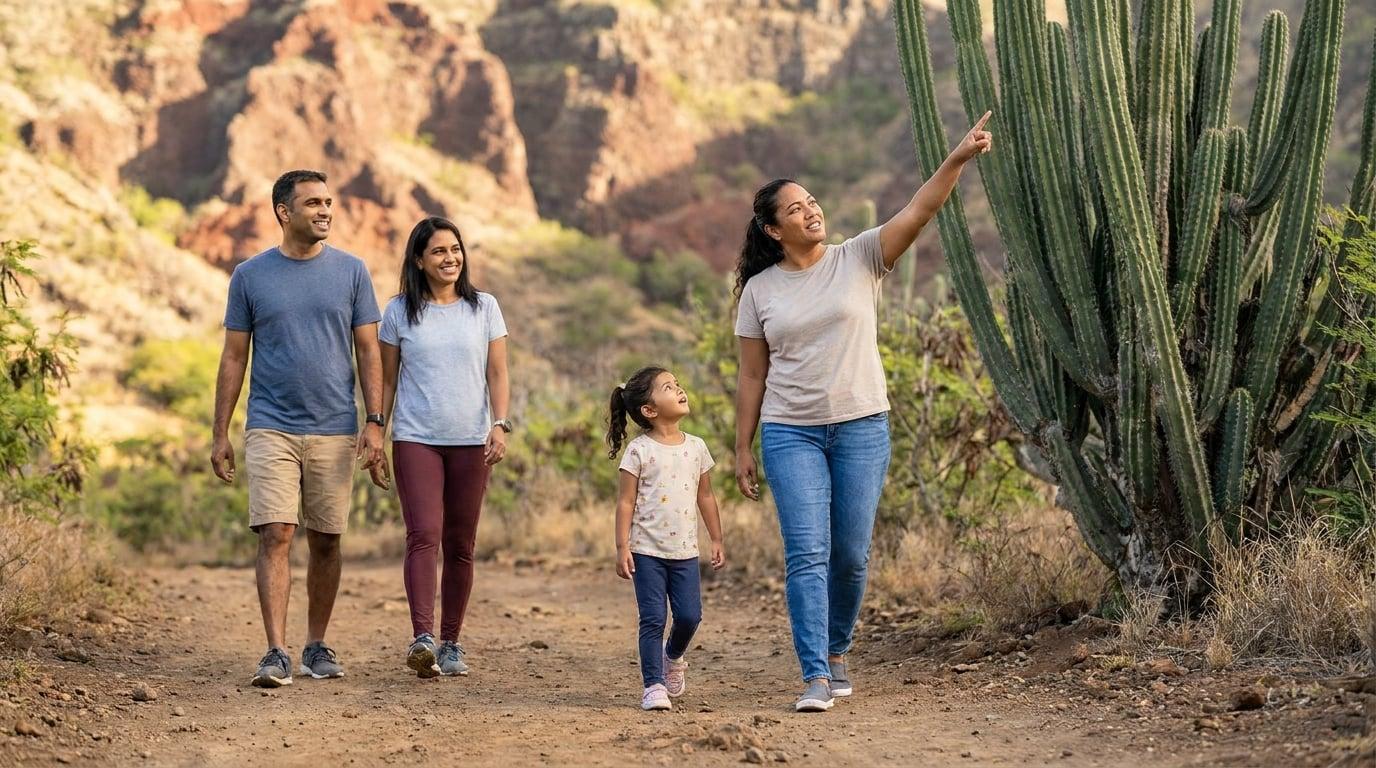
The entire walk takes about an hour at toddler pace, though many families linger longer. There are no steep climbs, no steps, and no narrow boardwalks—just a straightforward loop that lets you turn back at any point. Side paths branch off to explore specific plant collections, but the main route is clearly marked and easy to follow. Shade is sparse in the open sections, so early mornings or late afternoons are the most comfortable times to visit, especially in summer when the crater holds heat.
[[image:1]]

The cacti and succulents that fascinate children
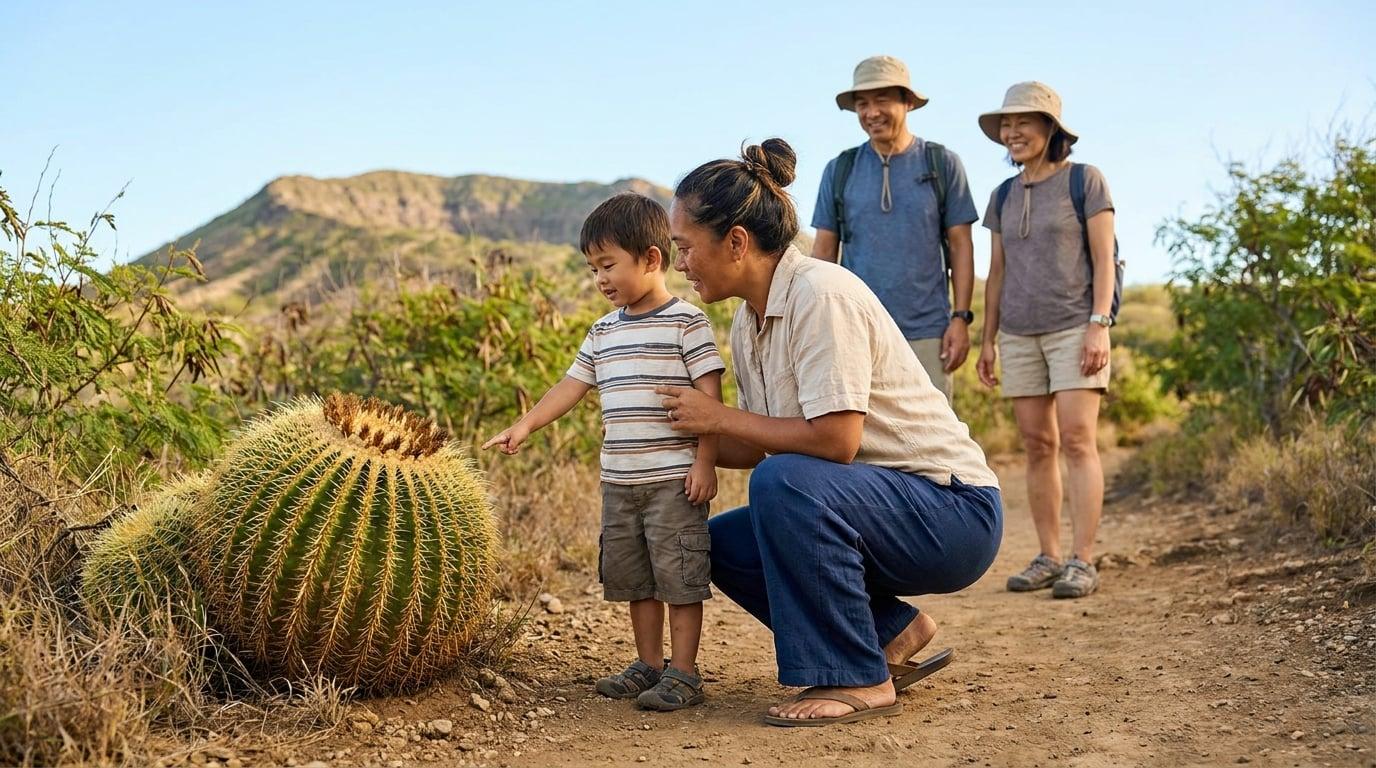
The Americas Section is where most children stop in their tracks. Towering columnar cacti rise several metres overhead, their ribbed trunks covered in spines. Barrel cacti squat like green boulders, and prickly pear paddles spread in dense clusters. For children used to Hawaii's tropical greenery, these desert giants feel almost alien—and endlessly fascinating.
The garden's succulent collection includes aloes with spiky rosettes, euphorbias that resemble candelabras, and strange sculptural forms that prompt endless questions. Many plants are labelled with interpretive signs, though not all. The visual drama is enough: children love comparing sizes, spotting the longest spines, and marvelling at how plants this prickly can thrive in Hawaii. It's a natural introduction to plant adaptation and biodiversity, delivered without a single museum label.
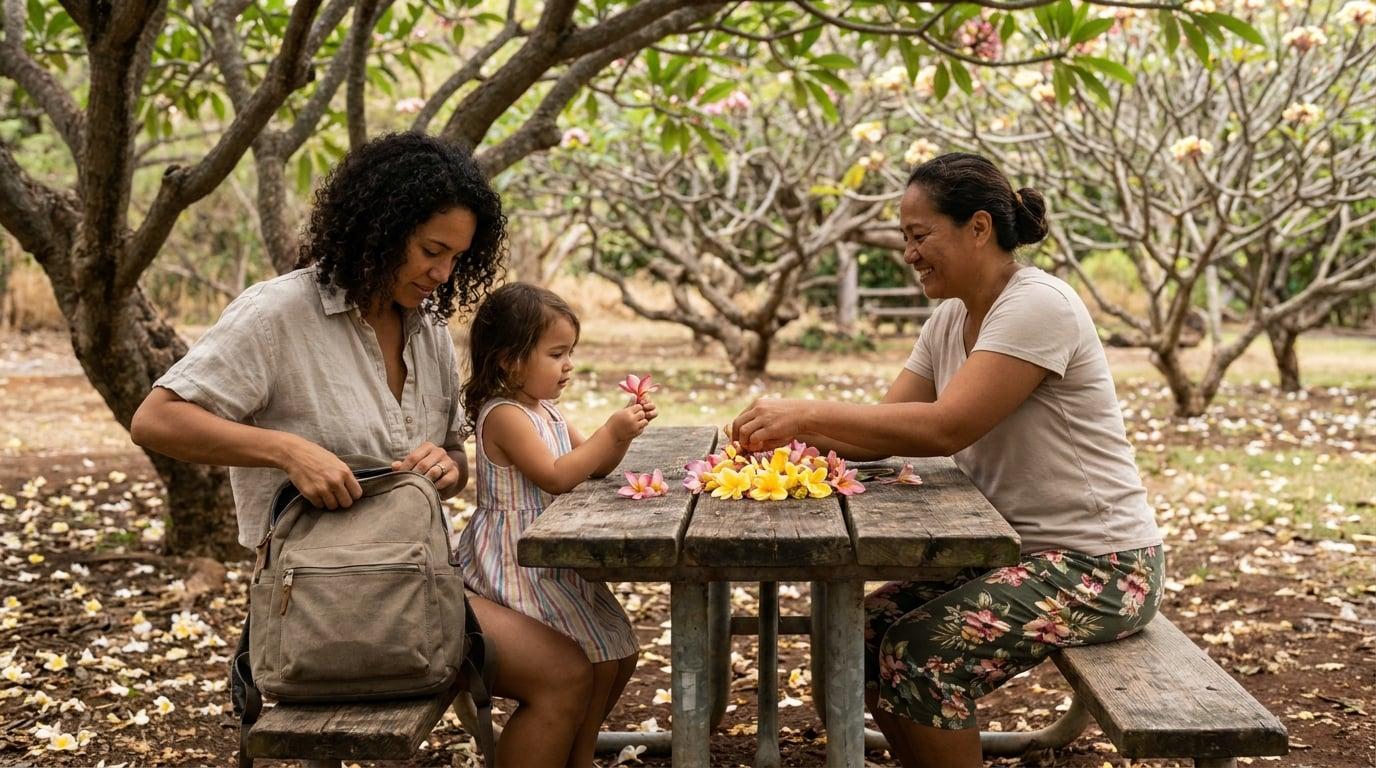
The plumeria grove, near the entrance, offers a softer contrast. Dozens of plumeria trees bloom in shades of pink, yellow, white and coral, their flowers carpeting the ground in fragrant drifts. Children enjoy collecting fallen blossoms (never pick from the tree) and comparing colours. The scent is sweet and heady, especially on warm days. In winter, when plumerias rest, the focus shifts to the wiliwili trees with their twisted branches and bright orange flowers, and the African baobabs with their swollen trunks.
Where to picnic inside the crater
Picnic tables are scattered throughout the garden, most positioned in partial shade beneath kiawe or palm trees. The plumeria grove has several tables surrounded by fallen flowers—a picturesque spot, though the ground can be slippery with petals. Further along the loop, tables sit near the cactus sections and offer views of the crater walls rising around you.
There are no food vendors, no water fountains, and only a single portable toilet near the entrance, so pack everything you need. Bring plenty of water—the crater's bowl shape traps heat and blocks breezes, making it feel warmer than the temperature outside. Snacks are essential for keeping energy up, especially with younger children. The tables are simple wooden benches, but the setting is unique: eating lunch surrounded by towering cacti and volcanic ridges feels a world away from Waikiki, even though you're only thirty minutes' drive from the city.
Some families spread a blanket on the grassy patches near the plumeria grove, though shade is limited. If you're visiting in the heat of the day, aim for the tables tucked under trees. The garden's low visitor numbers mean you'll rarely compete for a spot.
[[image:2]]
Practical details for families
The garden is open daily; check the official site for current hours, which can vary. Admission and parking are free. The small car park sits at the end of Kokonani Street in Hawaii Kai, about twenty-five minutes from Waikiki via the scenic Kalanianaole Highway. Arrive early if you're visiting on weekends, though the garden rarely feels crowded.
Wear closed-toe shoes with good grip—the paths are dusty, and loose gravel can shift underfoot. Hats and sunscreen are non-negotiable; the crater offers little natural shade, and the sun reflects off the pale dirt. Bring a carrier or sling as a backup if your stroller struggles on rougher patches, though most families complete the loop without needing one.
Don't confuse this garden with the Koko Head Crater Trail, a punishing stair climb up the outside of a neighbouring crater. The botanical garden is the easy, flat walk inside the basin—perfect for prams and small legs. Dogs are not permitted, and there are no cafés or shops, so plan accordingly.
How a local nanny helps here
Navigating an unpaved loop in the heat with a stroller, a toddler who wants to touch every cactus, and a baby due for a nap can stretch even the most patient parent. A local nanny from The Travel Nanny knows which sections offer the best shade, how to keep curious hands away from spines, and when to turn back before meltdowns strike. She'll pack the right snacks, point out the plants that fascinate children most, and give you the breathing room to enjoy the strange beauty of this volcanic garden without constantly counting heads or wrestling the stroller over ruts.
What else to know before you go
The garden's microclimate is one of Oahu's driest, receiving only twelve to twenty inches of rain per year. That makes it ideal for cacti and succulents, but also means dust and heat are constant companions. Visit in the cooler months (November to March) for the most comfortable conditions, or come early in the morning year-round.
The loop is self-guided, with interpretive signs marking major plant collections. There's no set direction, so you can walk clockwise or anticlockwise depending on where your children's attention pulls you. Many families do a short version—just the plumeria grove and cactus section—and save the full loop for another visit.
The garden is part of the Honolulu Botanical Gardens system and focuses on rare and endangered dryland species. It's a working conservation site as well as a public park, so respect the plantings and keep children on the paths. The volcanic crater walls rise steeply around you, a dramatic reminder that this sheltered basin was formed tens of thousands of years ago.
[[image:3]]
Before you visit: a quick checklist
- Stroller: Bring an all-terrain or jogging stroller; lightweight models may struggle on gravel
- Water: Pack more than you think you'll need—there are no taps or vendors
- Snacks: Essential for keeping energy and moods steady
- Sun protection: Hats, sunscreen and sunglasses for everyone
- Footwear: Closed-toe shoes with grip; sandals will fill with dust
- Timing: Early morning or late afternoon to avoid peak heat
- Backup carrier: Useful if stroller wheels bog down or a child tires
- Toilet stop: Use facilities before you arrive; only a portable toilet on-site
- Check hours: Confirm opening times on the official site before you go
- Camera: The cacti and crater views are worth capturing