



osaka
本文目前僅提供英文版。
When the forecast turns grey or your children have simply had enough of shrine etiquette, Kids Plaza Osaka offers five floors of guilt-free chaos. Japan's first full-scale children's museum sits inside the Kansai TV building near Ogimachi Station, and it remains the city's most reliable indoor fallback for families with children aged one to ten. The centrepiece is a towering, colourful climbing structure designed by Austrian artist Friedensreich Hundertwasser that spans two floors, but the real draw is simpler: almost everything here can be touched, climbed, scanned or pumped.
Plan for three to four hours. The museum allows same-day re-entry, so families often alternate between the exhibits and the free playground in Ogimachi Park next door.
The Hundertwasser climbing castle
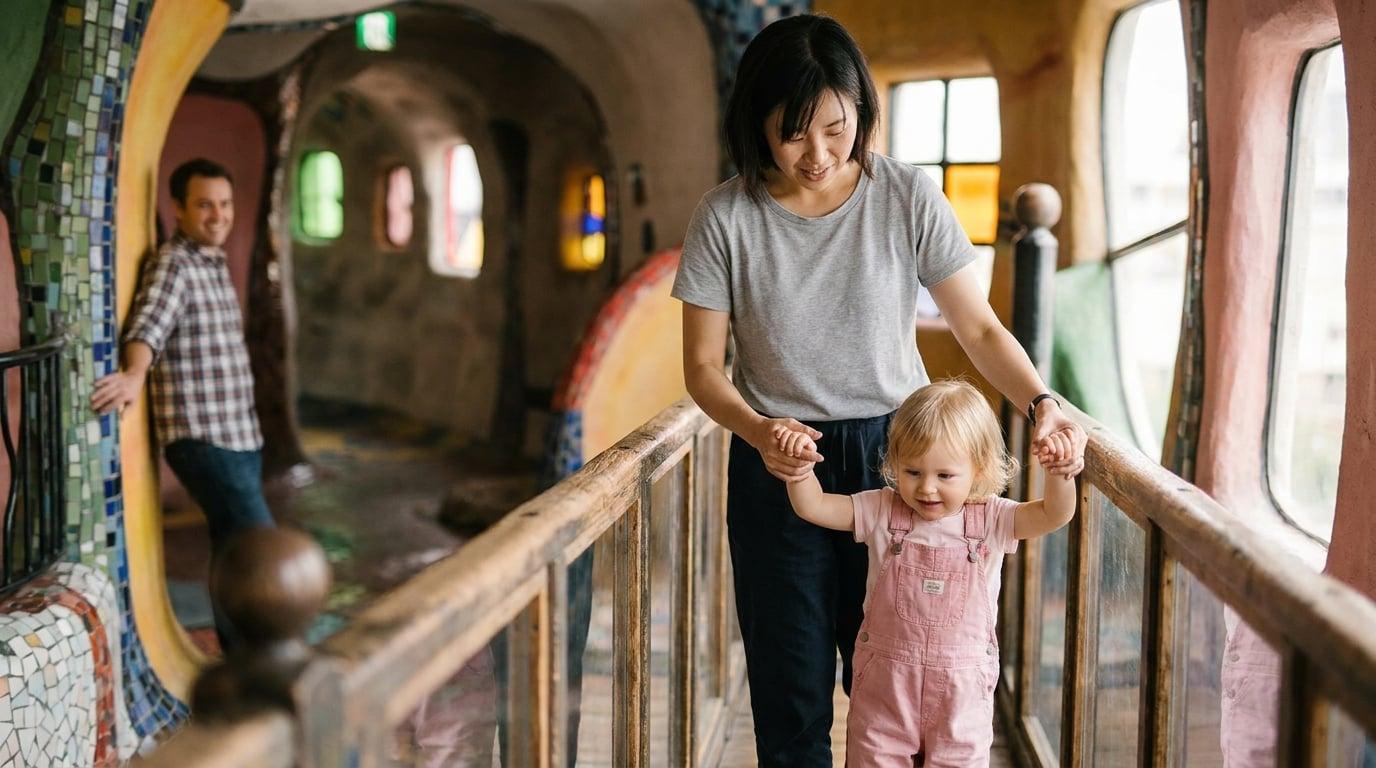
Kids Town dominates the fourth and fifth floors. The structure is a maze of winding corridors, tube slides, a suspension bridge with a see-through floor and climbing tunnels that connect different levels. Children scramble up, shoot down the slide from the fifth floor to the fourth, then climb back up. The design is deliberately disorienting in the best possible way—no straight lines, no primary colours in the usual sense, and enough visual interest that adults pause to look at the ceiling.
It works for a wide age range. Toddlers who can climb stairs manage the gentler sections; older children treat it as an obstacle course. Weekday mornings during school term see large groups arrive around ten o'clock, so the structure is noticeably quieter after half past two.
[[image:1]]
The giant bubble station and science floor
The fifth floor holds the museum's most popular single exhibit: a station where staff lower a large ring around your child and lift a full-body soap bubble. The queue forms early and moves slowly, but the moment is oddly mesmerizing. Adjacent stations let children blow smaller bubbles, create rainbow bubble curtains and experiment with bubble shapes.
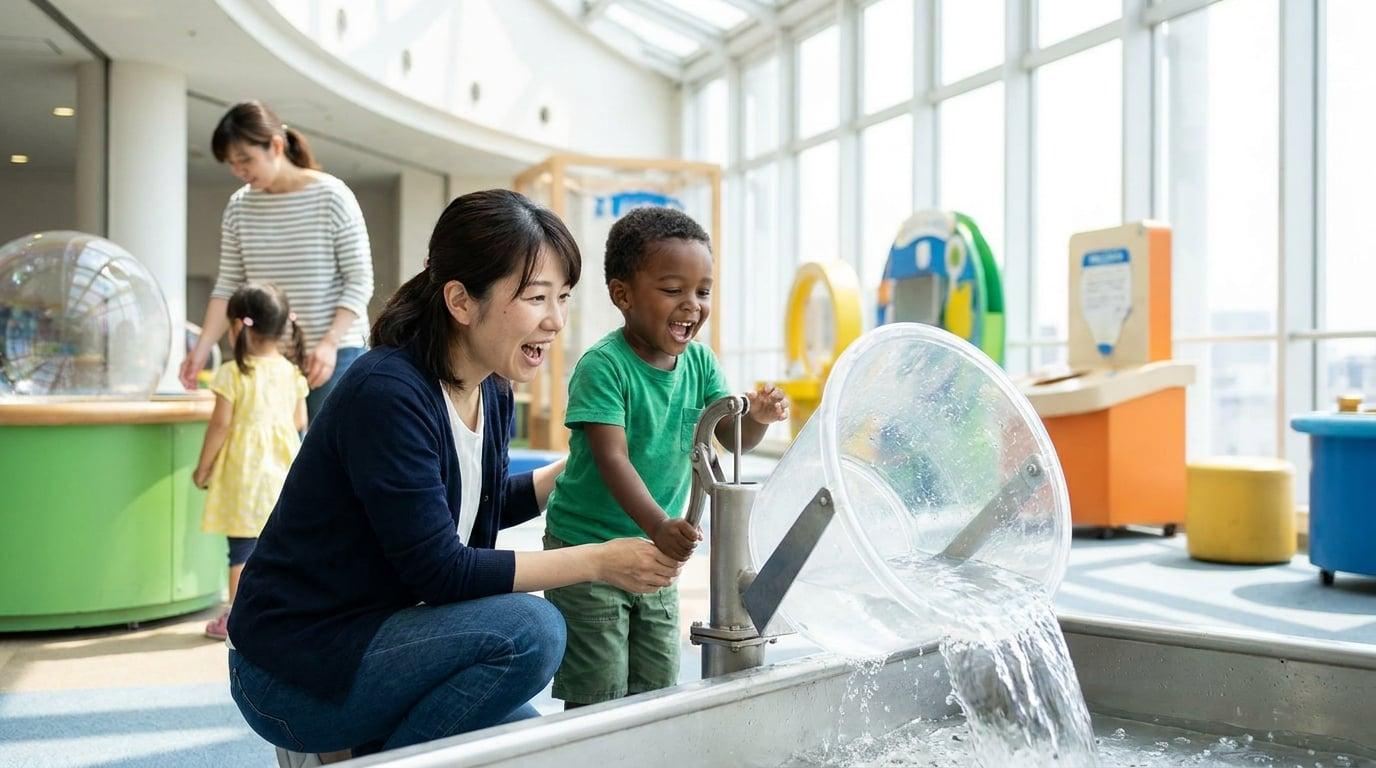
The rest of the fifth floor is devoted to hands-on science. Children pump water using four different mechanisms to fill a tank that tips over with a satisfying splash. A speed-measuring station lets them race and see their time on screen. There is a shadow wall where your outline stays frozen after you step away, a bicycle generator that powers lights, and a nature corner with creatures from Osaka Bay and the Yodo River that children can feed at set times. The exhibits are simple, direct and consistently engaging for the six-to-nine age group.
Pretend play and the self-checkout supermarket
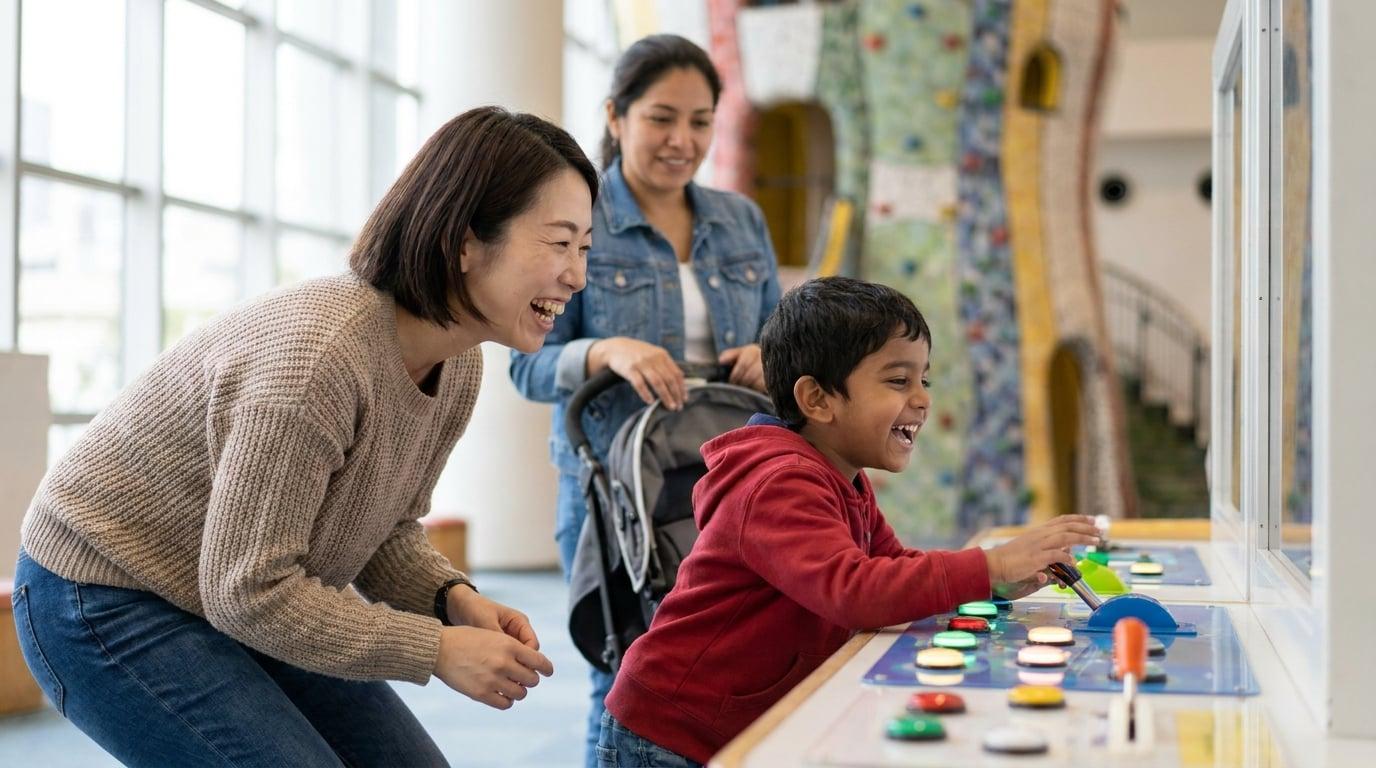
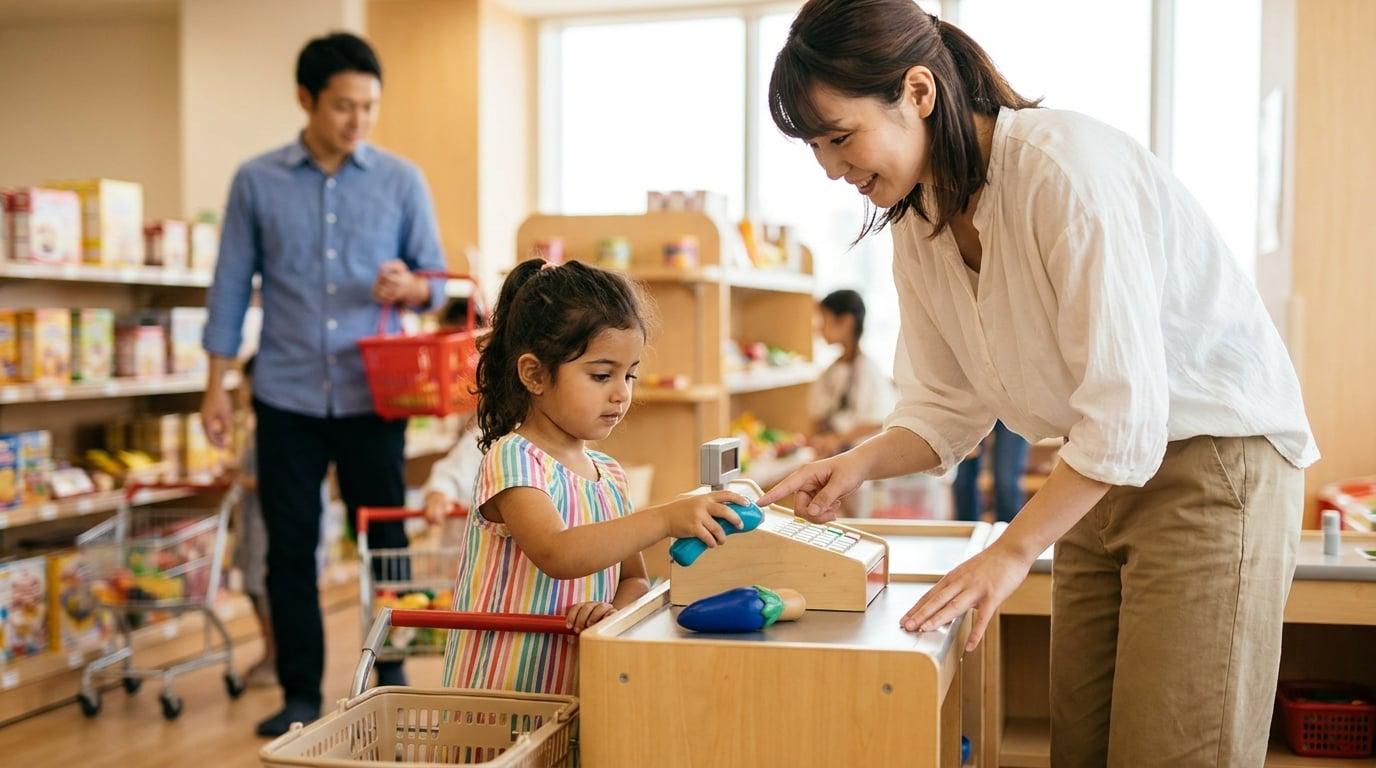
The fourth floor includes a miniature town with a supermarket, post office, bakery and hair salon. The supermarket is the star: children pick items from shelves, scan real barcodes at a working checkout and receive printed receipts. It is low-tech role play executed with enough detail to hold attention. The post office and other stations open at set times—usually around quarter past ten—and hours can shift on the day, so it is worth checking when you arrive.
A separate area on the same floor features musical instruments and traditional items from around the world, including displays inspired by Japan, Korea and various African nations. Children try instruments, handle toys and dress in national costumes. It is less structured than the supermarket but appeals to the same instinct to pick things up and see what happens.
[[image:2]]
The toddler zone and creative workshops
Peekaboo, a shoes-off area on the fourth floor, is designed for children under three. It has soft play equipment, baby-safe toys and a nursing room. The space is small but genuinely separate from the older-child chaos, and parents with a toddler and an older sibling can use it as a quiet base between rounds of the climbing castle.
The third floor holds a picture-book library stocked with Osaka-dialect titles and a creative studio where staff-led workshops rotate through the week. Activities range from simple crafts to digital experimentation zones where children create animations or play with large interactive screens. Some workshops require advance registration; others are drop-in. Check the official site for the current schedule.
How a local nanny helps here
Kids Plaza rewards the child who sets the pace, but managing that pace with more than one child—or in a second language—adds friction. A local nanny from The Travel Nanny keeps the day moving: she knows which exhibits open late, when the bubble station queue is shortest, and how to navigate the pretend-play town when your five-year-old insists on being the shopkeeper for the ninth consecutive turn. She will also spot the moments when your toddler needs the quiet of Peekaboo while your older child is mid-castle.
[[image:3]]
Practical details and nearby Ogimachi Park
Kids Plaza Osaka is located at 2-1-7 Ogimachi, Kita-ku. The nearest station is Ogimachi on the Osaka Metro Sakaisuji Line; use Exit 2 for direct access to the building. JR Temma Station on the Osaka Loop Line is a three-minute walk. Check the official site for current opening hours and ticket prices—the museum is closed on the second and third Monday of each month, the fourth Monday in August, and from 28 December to 2 January.
Ogimachi Park wraps around the back of the building. The playground has climbing walls, slides, swings, sand pits and open space. Because Kids Plaza allows same-day re-entry, families often start outdoors, move inside when energy or weather dictates, then return to the park for lunch. The museum sits at the northern end of Tenjinbashisuji Shotengai, a 2.6-kilometre covered shopping arcade lined with takoyaki stalls, ramen shops and convenience stores—useful for snacks or a meal before heading back to your accommodation.
Checklist: Kids Plaza Osaka
- Arrive after 14:30 on weekdays to avoid school groups
- The bubble station queue is longest mid-morning
- Pretend-play stations open around 10:15; confirm on arrival
- Same-day re-entry allowed—combine with Ogimachi Park
- Peekaboo toddler zone is shoes-off; nursing room available
- No on-site parking; use Ogimachi or Temma stations
- Closed second and third Mondays each month
- Plan three to four hours minimum