


hawaii
本文目前僅提供英文版。
The North Shore has a reputation for monster waves and professional surfers, but between May and September the same coastline turns gentle. The summer swell drops, the water clears, and a handful of protected coves become some of the best places on Oahu to spend a beach day with babies and toddlers. Pair that with shallow tide pools full of tiny fish and a string of casual shrimp trucks, and you have everything you need for a relaxed, picnic-style day that works beautifully with nap schedules and small attention spans.
This is not winter North Shore. Winter brings the big surf, the competitions, and water conditions that are completely off-limits for young children. But summer is a different story, and if you time it right, the North Shore offers calm water, natural shade, and the kind of low-key beach experience that feels a world away from Waikiki.
The best calm beaches for babies and toddlers
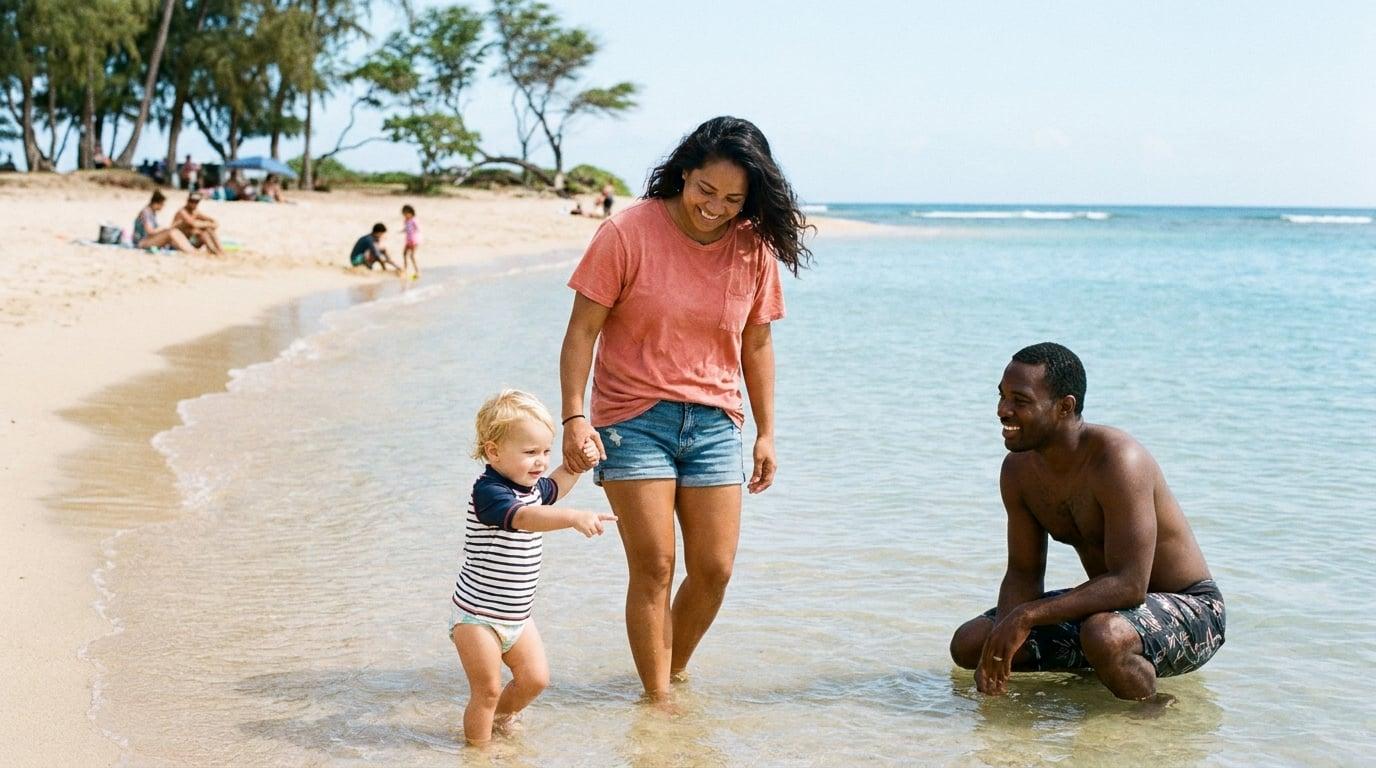
<cite index="1-2,8-4">Kuilima Cove, tucked beside Turtle Bay Resort, stays calm even when other North Shore beaches are too rough for swimming, thanks to natural rock barriers that shelter the water.</cite> <cite index="8-4">The cove is shallow, making it ideal for toddlers and beginning swimmers.</cite> There are ironwood trees nearby for shade, and the beach is an easy walk from the car park. It is one of the most reliably gentle spots on this stretch of coast.
<cite index="8-5,8-6">Kawela Bay, just north of Turtle Bay, is sheltered year-round, with calm water, white sand, and ironwood trees that provide natural shade.</cite> <cite index="8-7">It is rarely crowded and feels like a private beach.</cite> The bay is shallow enough for wading, and the protected conditions make it a lovely spot for a morning with little ones before the day heats up.
<cite index="29-8,29-10">Haleiwa Beach Park has a shallow sandbar that is perfect for small children to splash around, and lifeguards are on duty during regular hours.</cite> <cite index="32-3,32-6">The park offers shaded picnic areas, a children's playground, restrooms, showers, and ample free parking.</cite> <cite index="32-7,32-8">The harbour breakwall and rocky point protect the water from high surf, making it the safer, more sheltered option of the two Haleiwa beach parks.</cite> It is also within walking distance of Haleiwa town, so you can combine beach time with a wander through the shops or a stop for shave ice.
All of these beaches are at their calmest in the morning. Afternoon trade winds can pick up, and while the water stays safe, the breeze and chop make it less pleasant for babies. Aim to arrive by mid-morning, and you will have the best conditions.
[[image:1]]
Tide pool exploration at Shark's Cove
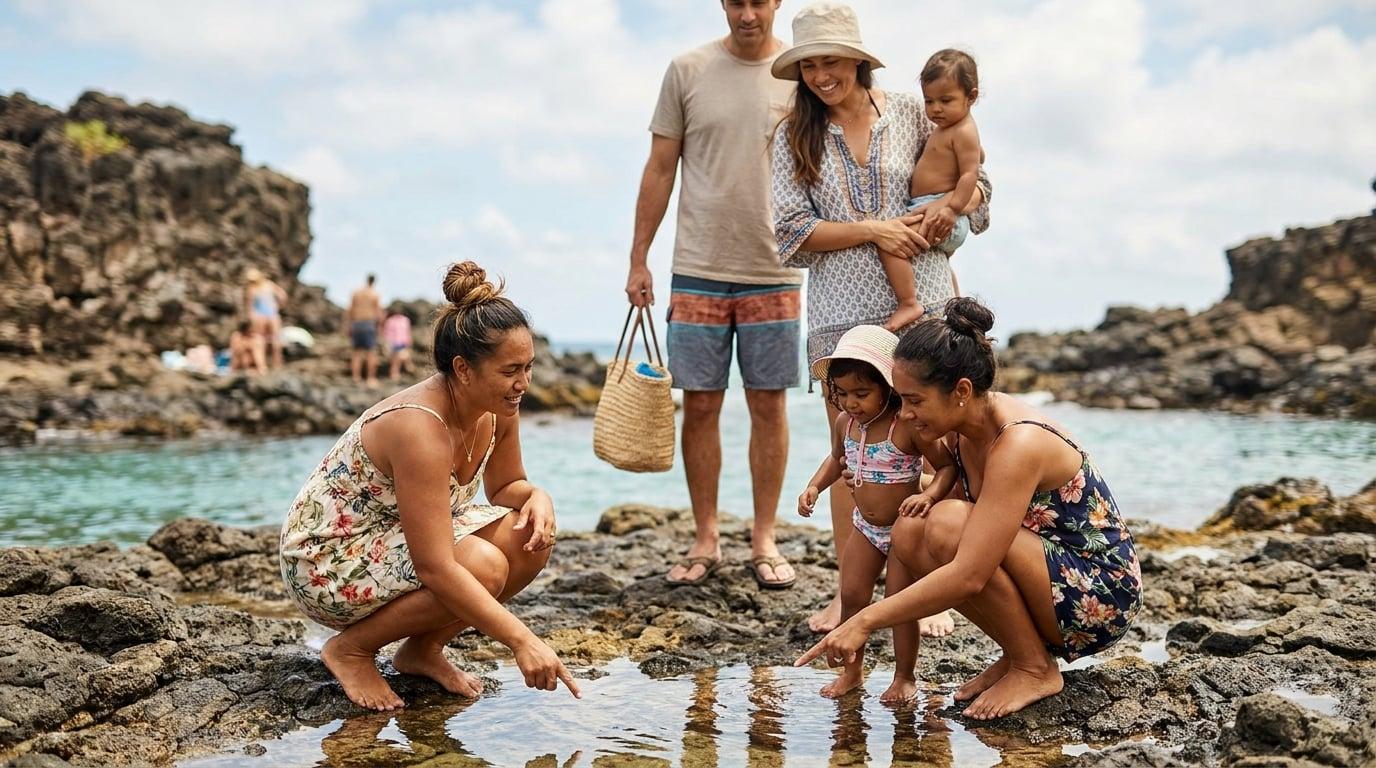
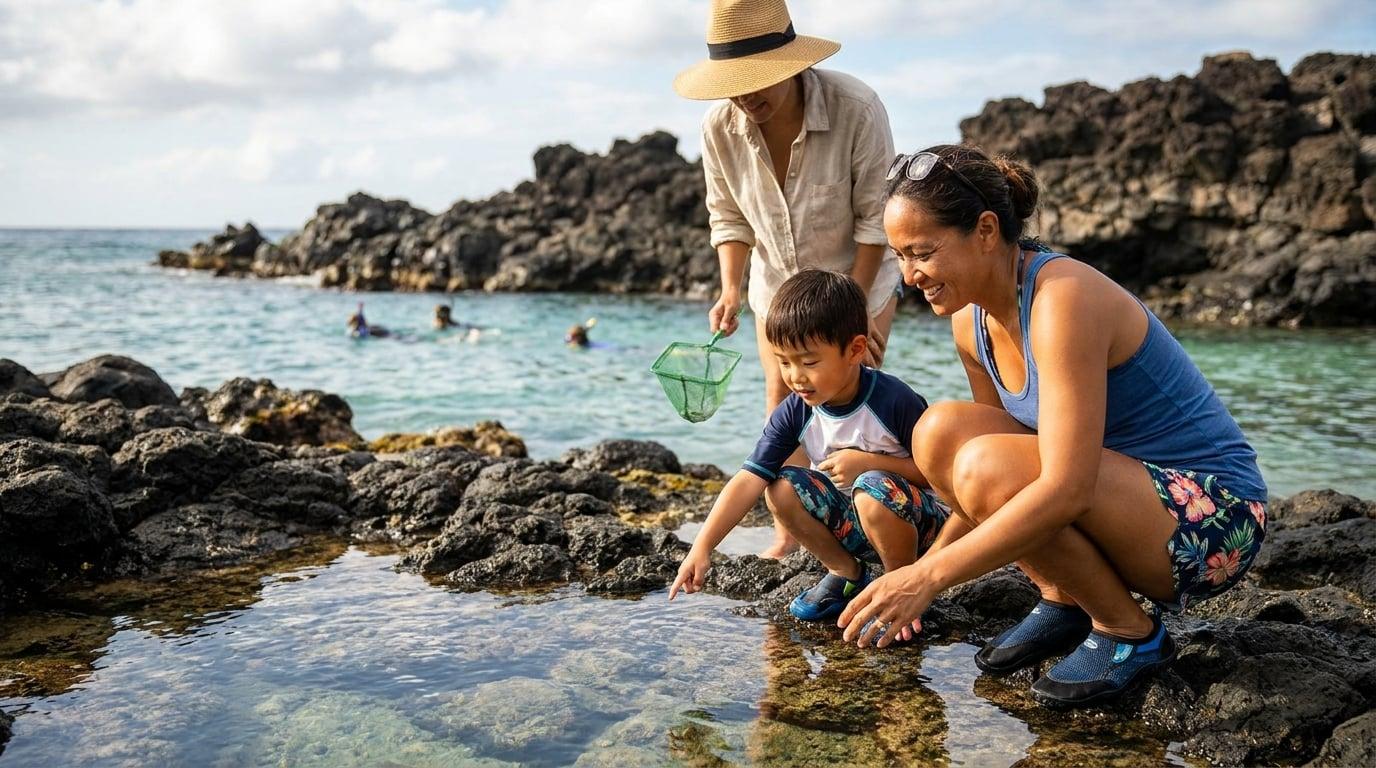
<cite index="11-6,11-7">On the south side of Shark's Cove sit the Pūpūkea tide pools, shallow rock-rimmed pools that trap seawater and the little creatures that live in it, so children can wade, peer, and poke around in ankle-deep water.</cite> <cite index="16-9">The pools form during low tide and are teeming with tiny sea creatures including crabs, shrimp, and juvenile fish.</cite> This is hands-on marine biology for toddlers, and it holds their attention far longer than you would expect.
<cite index="45-3,45-4">At low tide, the pools become natural aquariums—small, clear, and full of life—and this is the part of the park that works for almost everyone, including children who are not ready for the open cove.</cite> You do not need to snorkel or swim. You simply need to arrive at low tide, wear proper water shoes, and let your child crouch beside the pools and watch.
<cite index="11-8">The same rules apply as everywhere else: watch footing on the slick rock, keep water shoes on, and look without grabbing, since everything in the pools is part of the same protected reef.</cite> <cite index="45-6,45-7,45-8">The lava rock is razor sharp, and sea urchins tuck into the crevices, so sturdy water shoes or reef shoes are essential—bare feet and flip-flops do not survive this shoreline.</cite> Bring a small net or a clear container if you want to scoop and observe, but everything goes back in the water before you leave.
<cite index="14-11">North Shore pools like Shark's Cove benefit from excellent water circulation during calm summer conditions but should be avoided after any rainfall.</cite> <cite index="14-1,14-4">Follow the 72-hour rain rule before tide pooling, especially with children who will inevitably put wet hands in their mouths.</cite> Check the tide chart before you go—low tide gives you the most to see, and mid-tide is when the pools start to refill and lose their clarity.
[[image:2]]
Shade, facilities and what to bring
None of these beaches have the pavilions or permanent shade structures you find at some of the south shore parks, so you will need to bring your own. <cite index="7-1">On the more exposed beaches, a sandbag-weighted pop-up tent handles the North Shore wind better than an umbrella.</cite> Ironwood trees provide natural shade at Kawela Bay and near Kuilima Cove, but it is patchy and moves throughout the day, so a beach tent gives you reliable cover.
Kuilima Cove and Haleiwa Beach Park both have restrooms and outdoor showers. <cite index="40-13">Pupukea Beach Park (where Shark's Cove is located) has restrooms, showers, and ample parking, but no lifeguard.</cite> Kawela Bay has no facilities at all, so plan accordingly.
Water shoes are non-negotiable, even at the sandy beaches. The North Shore has more rock and coral underfoot than Waikiki, and even the gentlest entries can have sharp bits. Bring reef-safe sunscreen, plenty of drinking water, and snacks. The sun is strong, the shade is limited, and there are no kiosks or vendors at most of these beaches. Pack as if you are having a picnic in a very beautiful, very remote park, because that is essentially what you are doing.
North Shore shrimp trucks: easy, casual and child-friendly
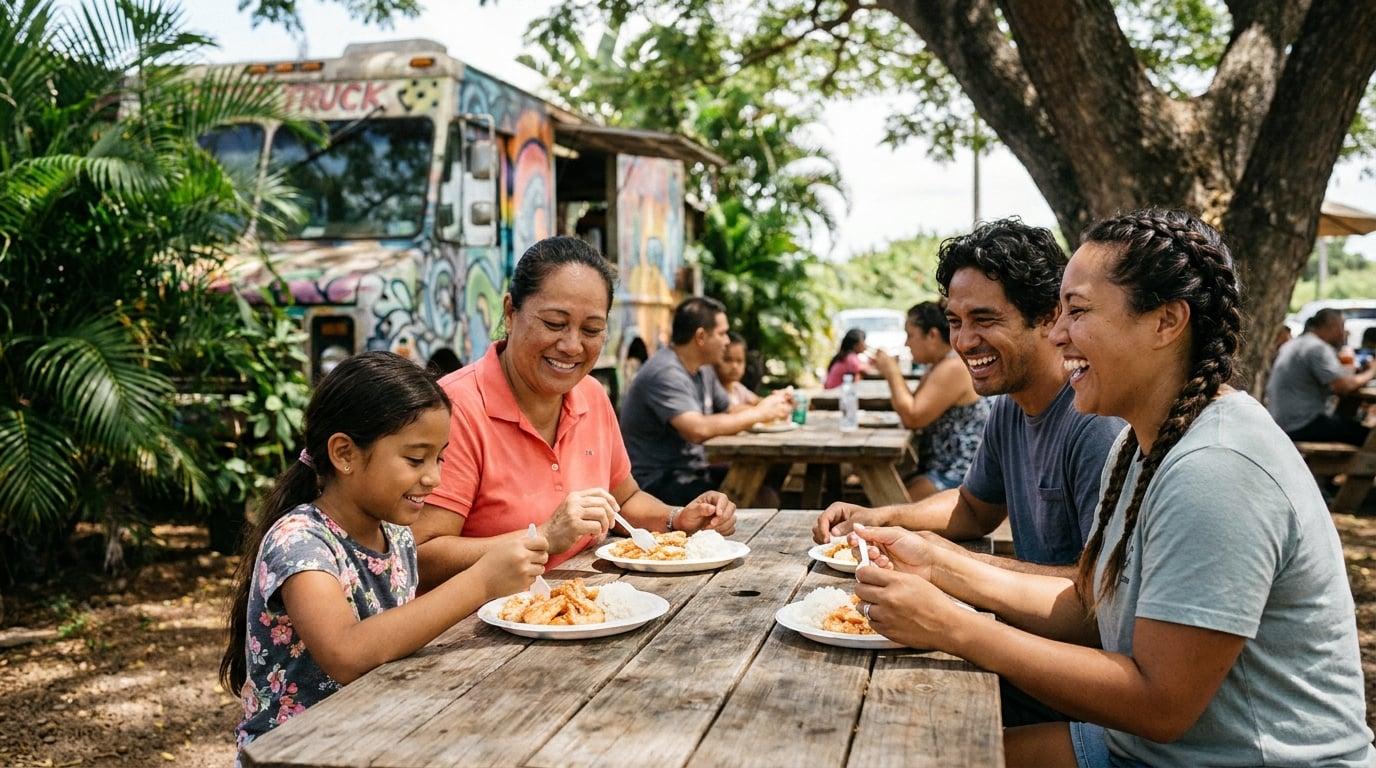
<cite index="25-5">The famous North Shore shrimp trucks have been serving plates of garlicky goodness for decades, thanks to the local shrimp farms in Kahuku that supply fresh shrimp to these roadside kitchens.</cite> <cite index="26-12,26-15,26-16">The trucks are great for families, with simple and mild flavours that children enjoy, and the relaxed outdoor seating makes it child-friendly.</cite>
The trucks cluster in two main areas: around Haleiwa town and in the Kahuku area further north. <cite index="25-10,25-11">There are two Giovanni's trucks on the North Shore—one in Haleiwa next to North Shore Crepes, and another in the giant Kahuku Sugar Mill food truck park, which is home to the largest concentration of food trucks on the North Shore.</cite> The Kahuku park has picnic tables, some shade, and enough variety that even the fussiest eater will find something.
Most trucks serve shrimp plates with rice and macaroni salad. Portions are large, plates are meant for sharing, and the vibe is completely casual—outdoor picnic tables, no fuss, and no one minds if your toddler drops rice everywhere. It is the opposite of a sit-down restaurant, which is exactly what you want mid-beach day. Check the official websites or social media pages for current opening hours, as they vary by truck and by season.
[[image:3]]
How a local nanny helps here
A beach day with babies involves a lot of gear, a lot of timing, and a lot of vigilance. One adult watches the toddler in the tide pools while the other unpacks the car. Someone needs to reapply sunscreen every hour, someone needs to notice when the baby is getting too much sun, and someone needs to be within arm's reach whenever a child is near water. The Travel Nanny matches visiting families with local Hawaiian nannies who know which beaches are calmest in the morning, how to navigate the lava rock safely, and when the tide pools at Shark's Cove are at their best. An extra pair of hands means one parent can actually relax for a moment, and a local guide means you spend less time guessing and more time enjoying the day.
Timing, season and safety
<cite index="2-13">Summer, from May through September, brings calm water at most North Shore beaches.</cite> <cite index="7-6,7-7">December through April brings large swells to the North Shore, and while Turtle Bay is somewhat protected, conditions on the exposed beaches can get rough during that window.</cite> <cite index="3-1,3-2">Winter brings bigger waves, especially on the North Shore, so stick with south shore beaches like Waikiki if you have young children during those months.</cite>
Even in summer, always check the conditions before you get in the water. <cite index="45-12,45-13,45-14">Watch the water before you enter—spend five minutes studying the surf from the rocks, and if waves are washing over the barrier, do not go in, not even in the tide pools.</cite> <cite index="14-12">Never turn your back on the ocean, as waves can surge unexpectedly over tide pool areas, and supervise children within arm's reach near pool edges.</cite>
The North Shore is farther from Waikiki than it looks on a map—plan for 45 minutes to an hour of driving each way, and factor in time for stops. Leave early, bring everything you need, and give yourself a flexible schedule. The beaches are worth the drive, but this is not a quick trip.
Before you go: checklist
- Visit May through September only; winter surf is dangerous for young children
- Check tide charts if visiting Shark's Cove tide pools (low tide is best)
- Avoid tide pools for 72 hours after heavy rain
- Pack a weighted pop-up tent or beach shelter for shade
- Bring water shoes for every member of the family
- Reef-safe sunscreen, drinking water, snacks and a small cooler
- Towels, swim nappies, change of clothes
- Small net or clear container for tide pool observation (optional)
- Check shrimp truck hours on official sites before you go
- Arrive at the beach by mid-morning for the calmest conditions
- Always supervise children within arm's reach near water