
taiwan
本文目前僅提供英文版。
Why Taipei's MRT is brilliant for families
Taipei's metro—officially the Taipei Mass Rapid Transit, or MRT—is clean, punctual, air-conditioned and designed with accessibility in mind. Every station has lifts, wide fare gates for strollers, and priority spaces on trains. Unlike older underground systems where you wrestle a pushchair up narrow stairs or hunt for a working lift, the Taipei MRT makes family travel straightforward.
The network covers six colour-coded lines linking the airport, museums, night markets, parks and shopping districts. Trains run roughly every five to eight minutes from 06:00 to midnight, and fares are distance-based but low—most journeys cost under NT$30 for an adult. Children under 115 cm tall ride free, which covers most pre-schoolers. The combination of reliable service, step-free access and generous child-fare rules means you can plan a day out without worrying about logistics.
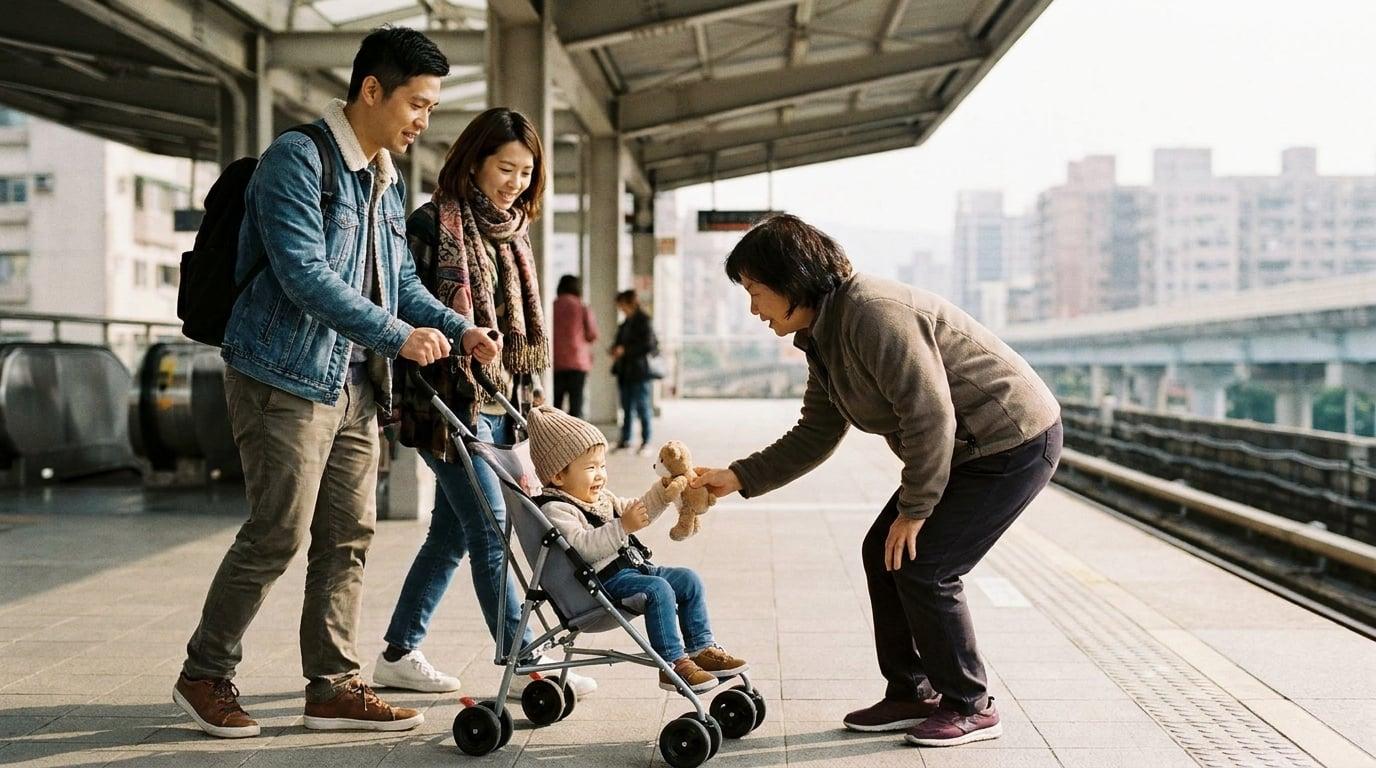
One practical note: while the MRT is stroller-friendly, Taipei's pavements outside stations vary. Older neighbourhoods have narrow arcades often blocked by scooters or stalls, so a lightweight folding stroller is easier to manoeuvre than a large all-terrain model once you're above ground.
Finding and using lifts at every station
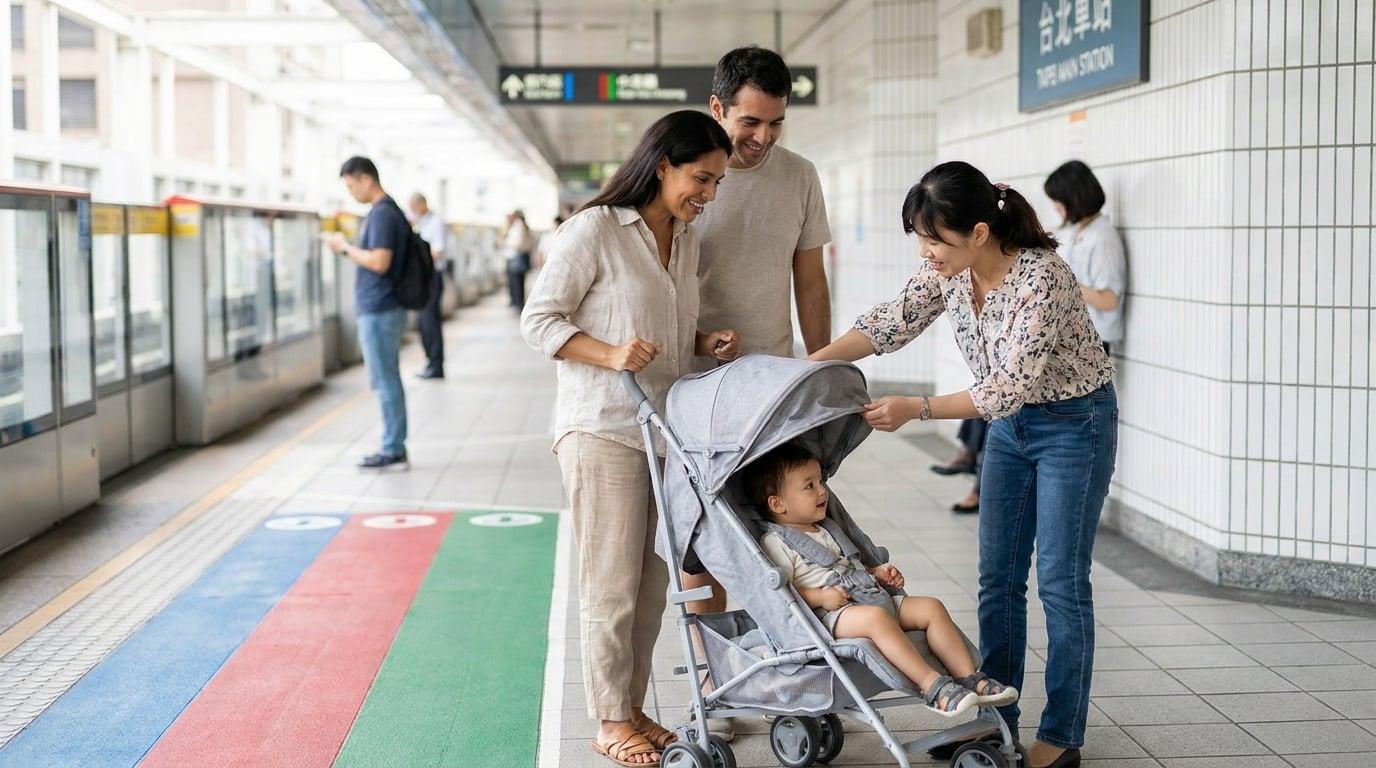
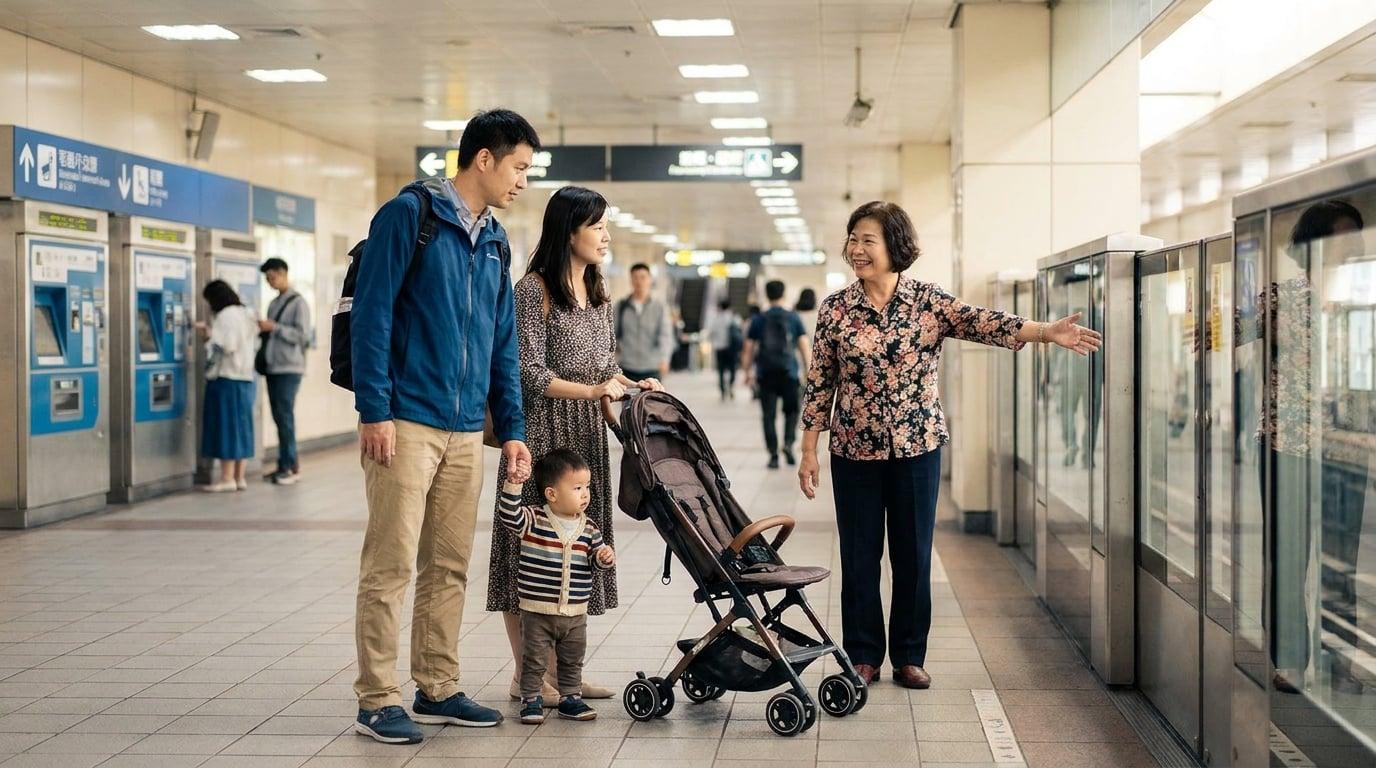
Every MRT station is equipped with lifts, but they're not always at the entrance you happen to choose. Look for the wheelchair symbol or the Chinese characters 電梯 (diàn tī, meaning lift) on station entrance signs. The lift is often at one end of the platform or ticket hall rather than dead centre, so check the signage as soon as you enter rather than carrying the stroller down an escalator.
Once inside, follow lift signs to the concourse level where you buy or tap tickets, then take a second lift down to the platform. Most platforms have lifts at both ends, but one may be closer to your exit at the destination station. If you're unsure, station staff are helpful and many speak basic English—or you can ask "電梯在哪裡?" (diàn tī zài nǎ lǐ?, "Where is the lift?").
Some stations are large interchanges with multiple exits. The official Taipei Metro website and the free Taipei Metro app show which exit numbers have lift access, so you can plan your route to come out near your destination without backtracking. This small bit of homework saves time, especially when you have a tired toddler.
[[image:1]]
Fare gates, tickets and the EasyCard
Most fare gates are narrow turnstiles, but every station has at least one wide gate—usually next to the staffed counter—that accommodates strollers, wheelchairs and luggage. Push the stroller through while holding your ticket or tapping your EasyCard on the reader. The gate stays open long enough for you to get through without rushing.
Children under six years old or shorter than 115 cm travel free when accompanied by a fare-paying adult. One adult ticket covers up to four children in that bracket, so if you're travelling with twins or siblings, you don't need separate child tickets. Children between 115 cm and 150 cm pay half fare; you'll need to show ID or measure height at the counter if asked, though in practice this is rare. Over 150 cm, children pay the adult fare.
The EasyCard—a rechargeable contactless card—is the simplest way to pay. You tap in and out, and the correct fare is deducted automatically. Cards work on MRT trains, city buses and at most convenience stores. You can buy an EasyCard at any MRT station counter or convenience shop for NT$100 deposit plus your chosen top-up amount; check the official site for current pricing. If you're making more than a couple of journeys, the card saves queuing for single-journey tickets each time.
Timing your journeys to avoid the crush
Taipei's MRT is busy during weekday morning peak (roughly 07:30 to 09:30) and evening peak (17:30 to 19:30). Carriages fill with commuters, and manoeuvring a stroller becomes awkward. If your schedule allows, travel mid-morning, early afternoon or after dinner when trains are quieter and you'll have space to park the pushchair near the doors without blocking the aisle.
Weekends and public holidays see tourist crowds, especially on lines serving night markets, Taipei 101 and the zoo, but the crush is less intense than a weekday commute and spread across the day. Aim for late morning or mid-afternoon rather than lunchtime or early evening if you want a seat.
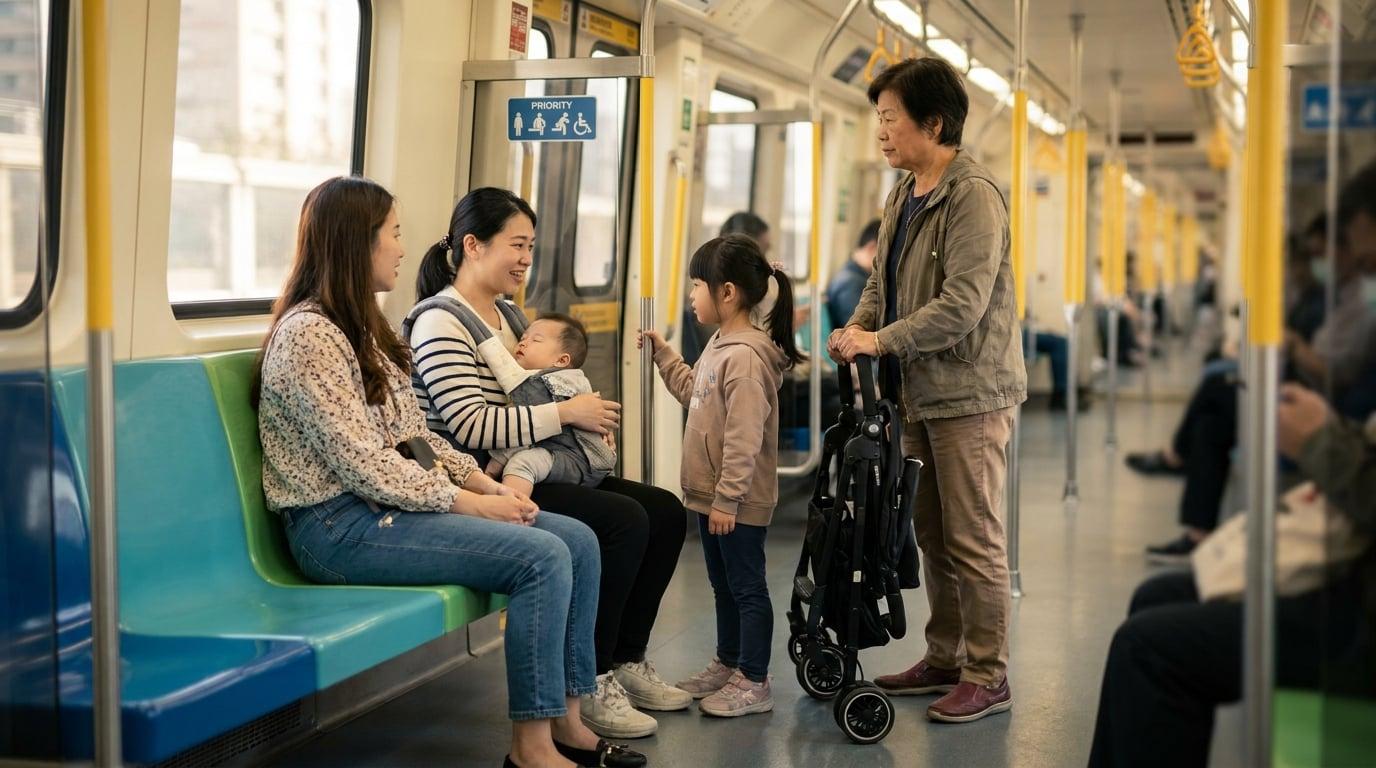
Priority seating—marked with different-coloured seats and signs—is reserved for elderly passengers, people with disabilities, pregnant women and those with young children. Taiwanese passengers often offer seats to parents with babies without being asked. If the priority seats are occupied and no one offers, it's perfectly acceptable to stand near the doors with your stroller; there's a designated space in most carriages.
How a local nanny helps here
Navigating the MRT is straightforward, but a local nanny brings an extra layer of ease. They know which station exits have the shortest walk to your hotel or attraction, can help fold and carry the stroller if a lift is out of service, and keep toddlers entertained during the journey so you can manage tickets and bags. When you arrive at a busy interchange or need to transfer lines quickly, a second pair of hands makes all the difference. For families juggling nap schedules, snacks and sightseeing, that support turns a good day into a smooth one. Find out more at travelnanny.com.
[[image:2]]
Rules about food, drink and stroller etiquette
Eating and drinking—including water, sweets and chewing gum—are strictly prohibited inside all MRT stations and on trains. The rule is enforced, and fines range from NT$1,500 to NT$7,500. If your toddler needs a snack or drink, step outside the station or finish before you enter. This can catch families off guard, so pack snacks in a bag and plan short breaks between journeys rather than relying on munching en route.
There is no formal rule requiring you to fold your stroller, but during peak hours or on crowded trains, folding and carrying it is considerate and sometimes necessary. Most of the time, especially outside rush hour, you can keep the stroller open and park it in the space near the doors. If the train is very full, station staff may ask you to fold it; a lightweight model makes this much easier.
Pet strollers have separate rules: small pet strollers (combined dimensions under 175 cm) are treated as hand luggage and travel free at any time. Larger pet strollers need a special ticket and are only allowed at certain stations during off-peak hours and weekends. This doesn't affect baby strollers, but it's worth knowing if you see other passengers with pet buggies and wonder why the rules differ.
Which stroller works best on the MRT
A compact, lightweight folding stroller is the most practical choice for Taipei. You'll find pavements outside stations are often uneven or crowded, covered arcades are narrow, and some shops and restaurants have steps. A big all-terrain pushchair is harder to steer through these spaces and takes up more room on the train.
If your child still naps in the stroller, choose a model with a reclining seat rather than an ultra-minimal umbrella fold. You'll spend time waiting at crossings, in queues and on platforms, and a sleeping toddler in a comfortable stroller is much easier to manage than a cranky one you have to carry.
Bring or rent a stroller even if your child usually walks. Museum visits, park outings and night-market browsing involve more standing and slower walking than you expect, and a stroller doubles as a luggage cart for bags, snacks and jackets. If you're hiring one in Taipei, check the official websites of baby-equipment rental services for current availability and hygiene standards.
[[image:3]]
Quick checklist for MRT travel with a stroller
- Buy or top up an EasyCard at a station counter or convenience store before your first journey
- Check which station exit has lift access using the Taipei Metro app or website
- Look for lift signs (電梯 or wheelchair symbol) as soon as you enter the station
- Use the wide fare gate next to the staffed counter
- Travel outside weekday peak hours (07:30–09:30 and 17:30–19:30) when possible
- Give snacks and drinks outside the station—food and drink are banned inside
- Keep the stroller near the doors in the priority space; fold it if the train is very crowded
- One adult fare covers up to four children under 115 cm or under six years old
- Bring a lightweight folding stroller for easier manoeuvring above ground
- Ask station staff or use the app if you're unsure which exit to take